

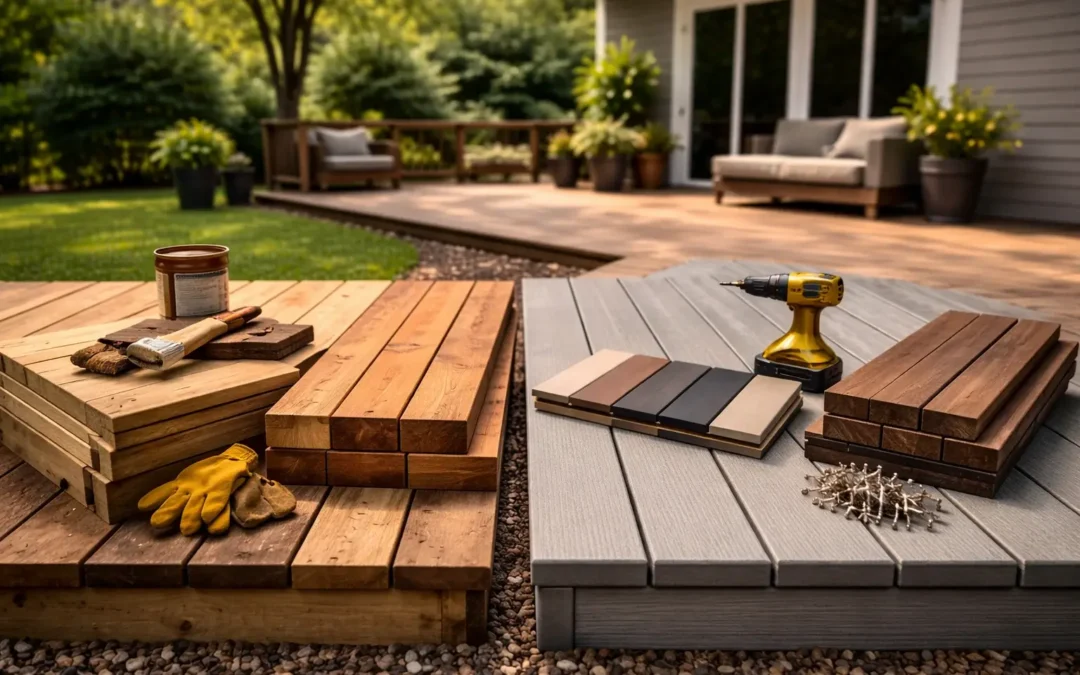
Choosing the best deck material is never just about color or style. In Illinois, the weather plays a huge role in how well a deck performs over time. Snow, ice, spring rain, humid summers, and constant freeze/thaw cycles can wear down the wrong material much faster than homeowners expect. That is why the best deck material for Illinois weather is not simply the cheapest option upfront. It is the one that can handle moisture, temperature swings, and long-term exposure without becoming a constant maintenance project.
Table of Contents
ToggleFor many Illinois homeowners, PVC and capped composite stand out as the strongest overall performers. They resist moisture better, require less upkeep, and generally hold up better over time in harsh weather. High-quality hardwoods can also be a strong choice for homeowners who want natural beauty and are prepared for more maintenance. Cedar and pressure-treated wood still have their place too, especially for budget-conscious projects, but they demand more care to last in this climate.
Why Illinois Weather Is Hard on Decks
Illinois puts decks through a lot in a single year. Winter brings snow, ice, and freezing temperatures. Spring adds moisture and temperature swings. Summer brings strong sun, humidity, and storms. Fall often means more moisture, debris, and changing temperatures again. This cycle repeats year after year, and each season puts stress on deck boards, framing, hardware, and fasteners.
The biggest challenge is moisture. When a material absorbs water and then freezes, it expands and contracts. Over time, that can lead to cracking, warping, splitting, and loosening. Add humidity and UV exposure on top of that, and the wrong deck material can start showing wear much sooner than expected. That is why Illinois homeowners need to think beyond appearance and focus on durability, moisture resistance, and maintenance.
Quick Answer: Which Deck Material Is Best for Illinois?
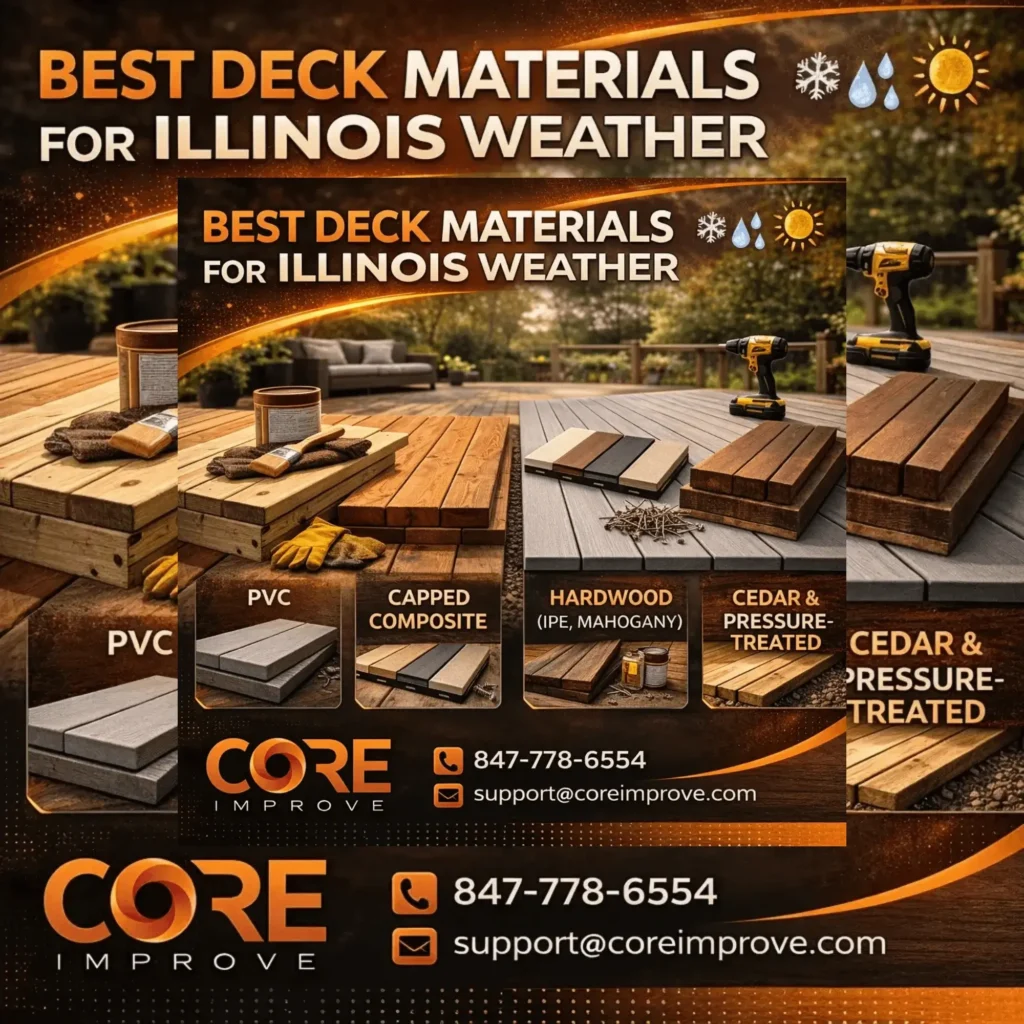
For most homes in Illinois, PVC decking is the best high-performance choice because it offers excellent resistance to moisture, rot, mold, splintering, and weather-related wear. Capped composite is a very close second and is often the best all-around balance of durability, appearance, and long-term value. Hardwood is the strongest natural-wood option, while cedar and pressure-treated wood are more affordable upfront but require much more upkeep.
So if your top goal is the best weather performance with the least maintenance, PVC usually wins. If you want strong long-term value and a wide range of colors and styles, capped composite is often the practical favorite. If you love the look of real wood and are willing to maintain it properly, hardwood can still be an excellent choice.
PVC Decking: The Best High-Performance Option for Illinois
PVC decking is often considered the top tier when it comes to weather resistance. It is made without wood fibers, which means it does not absorb moisture the same way wood or even some composite products can. That makes it especially well suited for Illinois conditions where snow, rain, humidity, and freeze/thaw cycles constantly challenge outdoor materials.
One of the biggest advantages of PVC is that it resists mold, mildew, rot, and splintering. It also requires very little maintenance compared to wood. There is no regular staining, sealing, or painting required. In most cases, seasonal cleaning is enough to keep it looking good.
PVC is a great option for homeowners who want the least amount of upkeep and the strongest moisture resistance possible. It is especially appealing for elevated decks, shaded areas that stay damp longer, and households that simply do not want to spend time maintaining wood every few years.
The tradeoff is cost. PVC is usually one of the more expensive deck board options upfront. Some homeowners also feel it has a more manufactured appearance compared to real wood. And like many synthetic boards, darker colors can feel warmer in direct summer sunlight.
Capped Composite Decking: The Best Balance of Value and Durability
Capped composite is one of the most popular deck materials for good reason. It combines a composite core with a protective outer shell that helps resist moisture, fading, stains, and surface wear. For Illinois homeowners, this creates a strong middle ground between the low-maintenance benefits of PVC and the broader design flexibility many people want.
Composite performs very well in snowy winters, rainy seasons, and humid summers. It is more stable than traditional wood and less likely to warp, crack, or splinter. It also gives homeowners more color and finish options, which makes it easier to match the home’s exterior style.
For many homeowners, capped composite is the practical sweet spot. It offers a low-maintenance lifestyle without stepping all the way up to premium PVC pricing. It still costs more than pressure-treated wood or cedar, but the reduction in long-term upkeep often makes it a very smart investment.
Not all composite products are equal, though. Entry-level lines and premium lines can perform differently over time, especially in terms of fading, staining, and heat retention. That is why product selection matters just as much as material category.
Hardwood Decking: The Best Natural Premium Option
If you want a real wood deck that can handle harsh weather better than softer woods, hardwoods like Ipe or mahogany deserve serious consideration. These materials are dense, durable, naturally resistant to insects and decay, and visually stunning. They offer the rich, authentic look that many homeowners still prefer over synthetic alternatives.
Hardwood can be an excellent fit for Illinois weather because it is tougher and more weather-resistant than common softwoods. It stands up better to wear, and with the right installation and care, it can last a very long time.
The catch is that hardwood is not a low-maintenance option if you want to preserve its original color and finish. It typically needs regular care, and the upfront cost is high. Installation is also more demanding because of the density of the material. Still, for homeowners who want a premium natural deck and are comfortable with the maintenance commitment, hardwood is one of the best-looking long-term options available.
Cedar and Pressure-Treated Wood: Budget-Friendly but Maintenance-Heavy
Pressure-treated wood remains one of the most common deck materials because it is the most budget-friendly way to build a deck. Cedar is also a popular wood option thanks to its natural appearance and better resistance to insects and decay compared to basic lumber.
These materials can absolutely work in Illinois, but they come with a maintenance expectation that homeowners need to be honest about. Pressure-treated wood and cedar both need regular cleaning, staining, and sealing to stand up to moisture, humidity, mildew, and UV exposure. Without that maintenance, they are far more likely to warp, crack, fade, splinter, and deteriorate over time.
Pressure-treated wood makes sense for homeowners who need the lowest upfront cost and are prepared for ongoing upkeep. Cedar can be a good fit for homeowners who want a more attractive natural wood option without stepping up to hardwood pricing. But neither is a “set it and forget it” material in Illinois weather.
Maintenance Comparison: Which Materials Need the Most Work?
Maintenance is one of the biggest dividing lines between deck materials.
PVC requires the least work. It usually just needs occasional washing and seasonal debris removal. Capped composite is similar, though some homeowners may need to pay more attention to staining or surface buildup depending on the product and surroundings.
Hardwood sits in the middle. It is durable, but preserving its appearance takes effort. If you want it to keep its original rich tone, maintenance matters. If you are comfortable letting it weather naturally, the maintenance can be less appearance-focused.
Pressure-treated wood and cedar need the most work by far. They need a regular care cycle that includes cleaning, sealing, and staining. In a climate like Illinois, that is not optional if you want the deck to last and look good.
Durability and Lifespan: What Lasts Longest?
PVC generally offers the longest expected lifespan among common deck board materials. It is highly resistant to water-related damage and is built for long-term weather exposure. Capped composite also offers a long service life and strong dimensional stability.
Hardwood can last a very long time as well, but how it looks over those years depends heavily on maintenance. Cedar and pressure-treated wood can still perform well, but their lifespan depends much more on upkeep, drainage, exposure, and how consistently the homeowner maintains them.
In other words, wood can last, but synthetic materials typically make long-term performance much easier to achieve in a climate like Illinois.
Cost Comparison: Upfront Price vs Long-Term Ownership
If you are only looking at the initial build cost, pressure-treated wood is usually the lowest-cost option. Cedar costs more, hardwood costs much more, capped composite is typically above wood, and PVC often sits at the top of the price range.
But the real comparison is long-term ownership. Wood may cost less today, but it often costs more in time and maintenance over the life of the deck. Stain, sealer, cleaning, repairs, and board replacement all add up. Composite and PVC cost more upfront, but they usually cost less to maintain and can hold their appearance better for longer.
That is why many homeowners end up choosing composite or PVC once they look beyond the installation quote and think about the next 10 to 20 years.
What Homeowners Usually Care About Most
When homeowners compare deck materials, their real concerns tend to fall into a few simple categories. They want to know which material lasts the longest, which one needs the least maintenance, which one stays looking good, and which one offers the best value for the money.
For some people, the answer is still wood because they love the natural appearance and are comfortable maintaining it. But for many Illinois homeowners, the appeal of low-maintenance living becomes more important after they realize how much weather exposure a deck sees every single year. That is why PVC and capped composite continue to grow in popularity.
Best Deck Material by Homeowner Type
If you want the strongest weather resistance and lowest maintenance, PVC is usually the best option.
If you want a balance of appearance, durability, and value, capped composite is often the smartest overall choice.
If you want premium natural beauty and do not mind higher cost and maintenance, hardwood is the best natural-wood answer.
If you want to keep installation cost lower and are comfortable with a more demanding maintenance schedule, cedar or pressure-treated wood may still work well for your goals.
Installation Details Matter Too
Even the best deck boards can underperform if they are not installed properly. In Illinois, airflow, drainage, joist spacing, fastening method, and room for seasonal movement all matter. Synthetic boards especially need to be installed according to manufacturer guidelines so they can expand and contract properly. Proper framing and spacing help any deck material last longer.
That means choosing the right contractor is just as important as choosing the right boards.
Core Improve: Helping Illinois Homeowners Choose the Right Deck Material
At Core Improve, we help homeowners across the Chicago suburbs choose deck materials that actually make sense for Illinois weather, budget, and long-term maintenance goals. Whether a customer is planning a brand-new deck or comparing options for a Deck Building & Deck Replacement project, the right answer depends on how they want the deck to perform over time. We also help homeowners protect and extend the life of wood decks through services like Deck Staining & Deck Repair, which is especially important when choosing cedar or pressure-treated lumber in a climate that sees so much moisture and seasonal change.
Final Thoughts
The best deck materials for Illinois weather are the ones that can handle moisture, freezing, humidity, and sun without becoming a maintenance burden. PVC stands out as the strongest weather performer. Capped composite is the best all-around choice for many homeowners because it offers durability, style, and long-term value. Hardwood is the premium natural option, while cedar and pressure-treated wood remain more budget-friendly choices that require more upkeep.
If you want the shortest path to a durable, lower-maintenance deck in Illinois, PVC or capped composite usually makes the most sense. If you prefer real wood and are ready to maintain it, hardwood, cedar, or treated wood can still be excellent choices. The best answer comes down to your budget, your maintenance tolerance, and how long you want the deck to keep performing at a high level.
FAQs
What is the best deck material for Illinois weather?
For most homeowners, PVC is the best weather performer, while capped composite is often the best all-around balance of durability, value, and appearance.
Is PVC decking better than composite in snow and rain?
PVC generally has stronger moisture resistance, which gives it an edge in wet and freeze/thaw conditions.
What deck material lasts the longest in Illinois?
PVC usually offers the longest lifespan, followed closely by high-quality capped composite and properly maintained hardwood.
Is composite decking worth it in Illinois?
Yes, for many homeowners it is. The lower maintenance and good long-term durability make it a strong value in Illinois weather.
Does PVC decking get hotter than wood?
It can, especially in darker colors and direct sun. Color choice and shade planning can help reduce that issue.
What is the cheapest deck material that still works in Illinois?
Pressure-treated wood is usually the cheapest upfront option, but it requires the most maintenance.
Is cedar a good deck material for Illinois homes?
It can be, especially for homeowners who want a natural look, but it needs regular sealing and maintenance to hold up well.
Which deck material requires the least maintenance?
PVC requires the least maintenance, with capped composite close behind.
Do composite and PVC decks handle freeze/thaw better than wood?
Yes. They resist moisture intrusion better, which helps them perform better during repeated freezing and thawing.
What deck material is best for long-term value?
For many homeowners, capped composite offers the best long-term value because it balances cost, durability, and low maintenance.
