
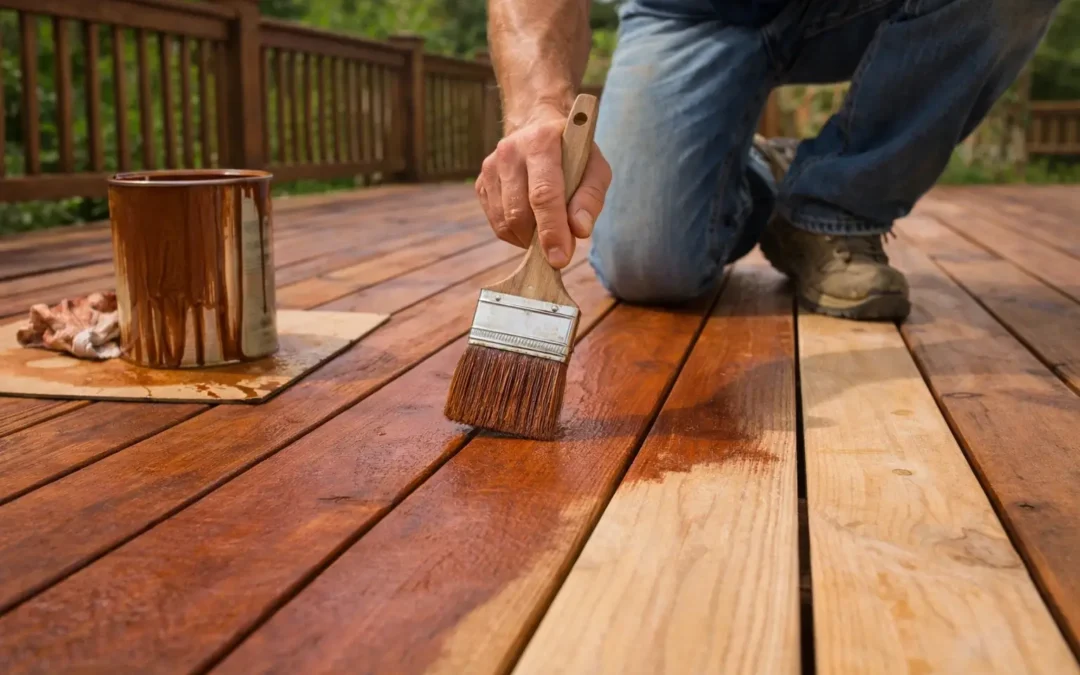
If you are wondering about the best time of year to stain a deck in Illinois, the short answer is late spring and early fall. These seasons usually give homeowners the most reliable mix of mild temperatures, lower humidity, and better drying conditions. That matters because deck stain does not just sit on top of the wood. It needs the right conditions to absorb properly, cure evenly, and hold up through changing weather.
In Illinois, timing a deck staining project is not only about the month on the calendar. It is also about the weather window you choose. A good stain job depends on dry wood, moderate temperatures, and a forecast that gives the deck time to dry without interruption from rain, heavy dew, or extreme heat.
That is why many deck staining projects go wrong in the middle of summer or too late in the fall. The stain may dry too fast, cure unevenly, or fail to bond the way it should. If the goal is a deck that looks better and stays protected longer, the timing of the project matters almost as much as the stain itself.
Why Timing Matters So Much
A wood deck deals with constant exposure. Sun, rain, snow, humidity, and freeze-thaw cycles all take a toll on the surface. When stain is applied under the wrong conditions, the finish can wear down faster, look blotchy, or start peeling sooner than expected.
Proper timing helps the stain soak into the wood instead of flashing off too quickly. It also helps the finish dry evenly across the full deck surface. That means better color, better protection, and a longer-lasting result overall.
This is especially important in Illinois, where weather patterns can shift quickly. A warm afternoon can be followed by evening moisture or a rainy stretch that slows drying. Choosing the right season gives you a better chance of getting stable conditions from start to finish.
The Best Seasons for Deck Staining in Illinois
For most homeowners, late spring is one of the best times to stain a deck. May and June often bring milder temperatures than midsummer, and the wood usually has enough time to dry after winter. Staining in late spring also helps protect the deck before heavy summer use begins.
Early fall is another strong option. September and early October can offer cooler air, less intense sunlight, and a more manageable surface temperature on the deck boards. That can make staining easier and help the finish settle more evenly.
Both seasons are usually better than the height of summer or the colder, damp stretch later in the year. The main goal is to avoid extremes. Deck stain performs best when conditions are stable rather than harsh.
Why Late Spring Works Well
Late spring gives homeowners a practical window between winter moisture and summer heat. By that point, the deck has usually had time to dry out, and you can more clearly see what kind of wear or damage the colder months left behind.
This is also a smart time to handle cleaning, minor repairs, and staining in one coordinated project. If a few boards need replacement or the surface needs preparation, late spring gives you enough room to get everything done before peak outdoor season begins.
Another advantage is comfort. The deck surface is usually not as hot as it would be in July or August, which can help the stain absorb more evenly and make application easier overall.
Why Early Fall Also Makes Sense
Early fall is often overlooked, but it can be one of the best staining windows in Illinois. The extreme heat of summer starts to back off, the sun can be less aggressive, and the deck surface is often easier to work with during the day.
This season also gives homeowners a chance to refresh protection before winter returns. If your deck went through a busy summer of grilling, gatherings, furniture movement, and constant sun exposure, early fall can be the right time to restore its finish.
The key is not to wait too long. Once temperatures start dropping too much and overnight moisture becomes more common, staining conditions become less reliable. Early fall can be excellent, but late fall is usually a different story.
Spring vs Fall: Which Is Better?
There is no single answer that fits every home. For some Illinois homeowners, spring is better because it gets the deck protected before the season of heavy use. For others, fall makes more sense because the weather is often less intense and the wood has already dried through summer.
If your deck needs cleaning, repairs, and surface preparation after winter, spring may be the better choice. If the deck is still in decent shape but the finish looks tired after summer exposure, early fall may be ideal.
In most cases, the better season is the one that gives you the best weather window. If the forecast is dry, temperatures are moderate, and the deck is ready, either late spring or early fall can work very well.
The Weather Conditions That Matter Most
The best time to stain a deck is not just about the season. It is about the conditions on the day you stain and the day or two around it. Temperature, humidity, sunlight, and moisture in the wood all play a role.
Moderate temperatures are important because extremely hot wood can cause stain to dry too fast. When that happens, the finish may not penetrate as it should. On the other hand, if temperatures are too cold, drying and curing can slow down too much.
Humidity matters too. A very humid day can delay drying and leave the finish vulnerable for longer. Direct sunlight can also work against you, especially when the deck boards get hot enough to speed up evaporation before the stain has time to settle properly.
Just as important is rain. If rain is expected too soon after staining, the finish may be disrupted before it has time to cure. That is why a clean, dry weather window is such a big part of the timing decision.
When Summer Can Be a Problem
A lot of homeowners assume summer is the best time to stain because the weather is warm and the deck is being used more often. In reality, midsummer is often one of the trickiest times to do the job in Illinois.
High heat can make the wood surface too hot, especially on decks that get direct sun most of the day. That can lead to fast drying, uneven color, and a finish that does not hold up as well over time. High humidity can make things worse by interfering with proper curing.
That does not mean summer is impossible. It just means the margin for error is smaller. If staining has to happen in summer, it is usually better to work during a cooler part of the day and avoid the hottest, brightest hours.
Why Late Fall and Winter Are Usually Poor Choices
Once late fall sets in, deck staining becomes harder to time well. Colder air, longer drying times, frequent dampness, and overnight temperature drops can all create problems. Even if the day feels workable, the conditions may not stay stable long enough for the stain to cure properly.
Winter is generally the least favorable time. Wood often holds more moisture, temperatures are too low, and the deck may not stay dry long enough to support a quality finish. Even if the stain goes on, it may not perform the way it should.
If the deck needs attention late in the year, it is often better to wait for a proper weather window rather than rush a project in poor conditions.
How to Know If Your Deck Is Ready
Before staining begins, the deck itself needs to be ready. That means clean wood, dry wood, and a surface that can actually accept the stain. If the deck is dirty, damp, or covered in old failing finish, the timing on the calendar will not matter much.
A simple way homeowners often judge readiness is by checking how water behaves on the boards. If water still beads tightly on the surface, the deck may not be ready for a fresh coat. If the wood absorbs the water more naturally, it is usually a better sign that the surface can take stain.
Newer decks need extra attention here. Fresh wood often needs time to dry out and settle before staining. Applying stain too early can lead to disappointing results, especially if the wood still holds excess moisture.
How Often Should a Deck Be Restained in Illinois?
Most decks in Illinois do not need staining every year, but they do need regular attention. A common range is every two to three years, though that timing depends on sun exposure, weather, foot traffic, and the type of stain used.
A deck in full sun may need attention sooner than one with more shade. A heavily used family deck may wear faster than a quieter one. That is why annual inspection matters even when staining is not due yet.
Instead of following a strict calendar alone, it helps to watch the condition of the finish. If the deck starts looking dry, faded, patchy, or less water-resistant, it may be time to plan the next staining project.
A Simple Illinois Staining Schedule
For many homeowners, the easiest approach is to inspect the deck in spring, decide whether it needs cleaning or repair, and then look for a late spring weather window if staining is needed. If the deck is still holding up well, check it again after summer and consider early fall instead.
This approach gives you flexibility without guessing. You are not forcing the project into the wrong season. You are choosing the best window based on the deck’s condition and the weather available.
That is usually the smartest way to handle outdoor wood care in Illinois, where conditions can change quickly and timing has a real impact on the result.
Why Homeowners Choose Core Improve
Core Improve is a family-owned, fully insured company serving Chicago and the surrounding suburbs with expert deck staining, deck repair, deck replacement, and deck building services. With more than 20 years of experience, the company focuses on quality craftsmanship, durable results, and a stress-free process for homeowners who want outdoor spaces that look better and hold up longer in Illinois weather.
Final Thoughts
The best time of year to stain a deck in Illinois is usually late spring or early fall. Those seasons tend to offer the balanced conditions that wood stain needs in order to absorb well, cure properly, and last longer. They also help homeowners avoid the biggest seasonal problems, including intense summer heat and late fall dampness.
More than anything, the right time comes down to the right weather window. Dry wood, moderate temperatures, lower humidity, and a rain-free forecast will usually give you a much better result than simply picking a month and hoping for the best.
If your goal is a deck that looks cleaner, stays protected, and performs well through Illinois seasons, timing the job carefully is one of the smartest decisions you can make.
FAQs
What Is the Best Month to Stain a Deck in Illinois?
May, June, September, and early October are often the most reliable months. These periods usually offer milder temperatures and better drying conditions than the peak of summer or the colder end of fall.
Is Spring or Fall Better for Deck Staining in Illinois?
Both can work very well. Spring is great for getting protection on before summer use, while early fall often brings cooler surfaces and less intense sun. The better choice usually depends on the deck’s condition and the forecast.
Can You Stain a Deck in Summer?
Yes, but summer can be more difficult. High heat, strong sun, and humidity can lead to uneven drying and a shorter-lasting finish. If staining happens in summer, it is better to choose a cooler weather window and avoid the hottest part of the day.
How Long Should a Deck Stay Dry Before Staining?
The deck should be fully dry before stain is applied. After rain or washing, the wood often needs time to dry out completely. Surface dryness is not always enough, so it is important not to rush the project.
How Often Should a Deck Be Stained in Illinois?
Many Illinois decks need restaining every two to three years, though some need it sooner depending on sun exposure, use, and weather. Regular inspections help you decide based on the deck’s actual condition.
Can You Stain a New Deck Right Away?
Usually, no. New wood often needs time to dry before it is ready to accept stain properly. Staining too soon can prevent good absorption and lead to an uneven finish.