

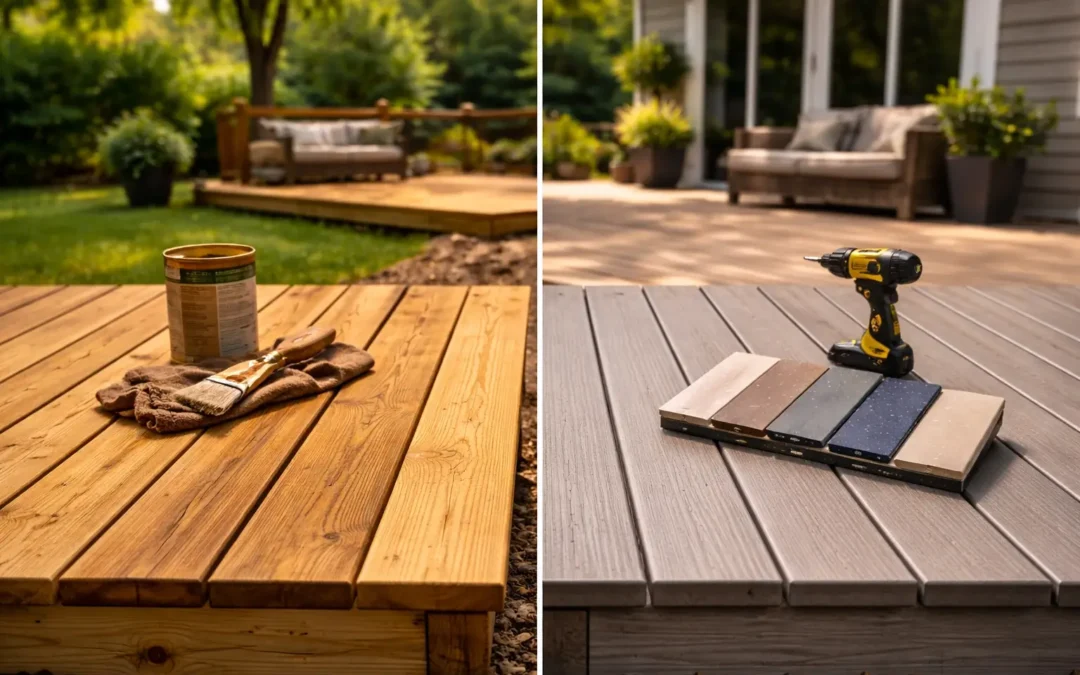
If you are planning a new deck for your home, one of the first big decisions is choosing between wood and composite decking. At first glance, the choice can seem simple: wood usually costs less upfront, while composite is marketed as lower maintenance. But for Illinois homeowners, the decision goes deeper than that. Illinois weather is tough on outdoor materials. Snow, ice, humidity, rain, freeze/thaw cycles, and hot summer sun all put constant stress on a deck.
That is why the real question is not just which material looks better on day one. It is which material performs better over time, fits your budget beyond installation, and makes the most sense for how you actually use your outdoor space. For many Illinois homes, composite decking has a strong advantage because it handles moisture and weather swings better while cutting down on maintenance. Still, wood remains a solid choice for homeowners who love a natural look and want a lower starting cost.
Quick Answer: Which Decking Material Wins in Illinois?
For most Illinois homeowners, composite decking is usually the better long-term choice. It holds up better against moisture, mold, rot, warping, and seasonal weather changes, and it requires far less maintenance over the life of the deck. Wood decking still appeals to homeowners who want real wood character and a lower upfront investment, but it demands more attention to keep it looking and performing well.
So if your top priorities are low maintenance, durability, and long-term value, composite usually wins. If your priorities are lower installation cost and natural wood beauty, wood may still be the better fit.
Why Illinois Climate Changes the Decision
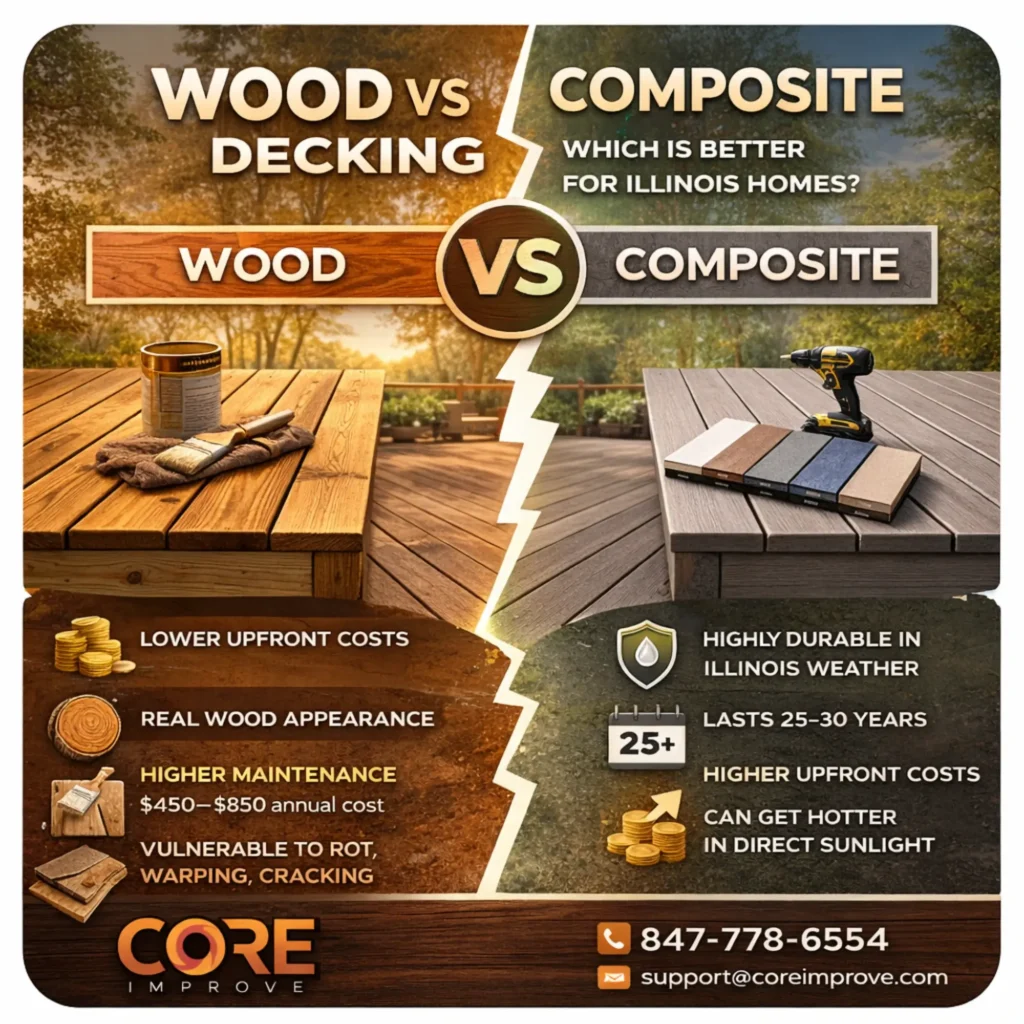
A deck in Illinois has to survive conditions that are harder on materials than many homeowners realize. Winters bring snow, freezing temperatures, and repeated thawing and refreezing. Summers bring heat, humidity, storms, and UV exposure. Those conditions are exactly why decking material matters so much here.
Harsh Winters and Freeze/Thaw Cycles
When moisture gets into deck boards and then freezes, it can create cracking, splitting, and long-term weakening. Wood is more vulnerable to this because it is porous and naturally absorbs moisture. Even when properly sealed, it still expands and contracts with changing weather. Over time, this can lead to warping, checking, and a rougher surface.
Composite decking is designed to resist those issues much better. It does not absorb water the same way wood does, which helps reduce the cycle of swelling, shrinking, and cracking. That added stability is one of the biggest reasons composite performs so well in Illinois.
Humid Summers and Moisture Exposure
Illinois summers are not just hot. They are also humid, and that creates a perfect environment for mildew, mold, and moisture-related wear. Wood decks can struggle in these conditions if they are not regularly cleaned, stained, and sealed. Moisture can settle into the boards, especially in shaded or low-airflow areas, which increases the risk of decay over time.
Composite performs better in these moisture-heavy conditions. It is not completely maintenance-free, but it is far less likely to rot, splinter, or break down from humidity and rain exposure.
Wood Decking: Pros and Cons for Illinois Homes
Wood decking remains popular for a reason. It offers a natural appearance that many homeowners still prefer, and it can make a lot of sense in the right situation.
Why Homeowners Still Choose Wood Decking
The biggest advantage of wood is cost. Pressure-treated wood is usually one of the most affordable ways to build a deck, which makes it attractive for homeowners working within a tighter budget. Wood also offers an authentic look and feel that no manufactured product fully duplicates. The grain variation, warmth, and natural character of real wood can be hard to beat, especially for traditional homes, rustic properties, or homeowners who simply love natural materials.
Wood is also flexible from a style standpoint. It can be stained in different colors, refinished over time, and refreshed to match changing preferences.
The Drawbacks of Wood in Illinois
The downside is maintenance. Wood decking in Illinois needs consistent care to stand up to the climate. That usually means cleaning, staining, and sealing on a routine schedule. If you fall behind, the deck can start to fade, absorb moisture, splinter, and wear unevenly.
Wood is also more likely to crack, warp, cup, and develop soft spots over time. Snow, rain, and summer humidity all accelerate those issues. So while wood may save money upfront, it often costs more in upkeep and repairs later.
Composite Decking: Pros and Cons for Illinois Homes
Composite decking has become one of the most popular choices for modern deck projects, especially in regions with demanding weather. Illinois is one of those places where composite’s advantages show up clearly.
Why Composite Performs Better Long Term
Composite decking is built for durability. It resists moisture better than wood, which means less warping, less rot risk, and fewer problems caused by freezing and thawing. It also resists insect damage, splintering, and many of the common issues that develop in aging wood decks.
Another major advantage is low maintenance. Composite does not require regular staining or sealing. Most of the time, keeping it in good shape comes down to occasional cleaning and basic seasonal care. For homeowners who want a deck that looks good without constant work, that matters a lot.
Composite also tends to maintain a more consistent look over time. It does not weather the same way wood does, and many product lines are designed to resist fading and staining better than older generations of composite materials.
The Tradeoffs of Composite
The biggest drawback is upfront cost. Composite boards generally cost more than pressure-treated wood, and that raises the installation price. Some homeowners also still prefer the feel and variation of real wood. Another concern is heat. Composite can get hotter than wood in full sun, especially darker colors, which is worth thinking about if your deck gets direct afternoon sunlight.
Still, for homeowners focused on long-term value, those tradeoffs are often worth it.
Maintenance Comparison: Wood vs Composite
When homeowners compare decking materials, maintenance is one of the biggest decision points. And this is where the gap between wood and composite becomes very clear.
A wood deck needs regular upkeep to stay protected. That means cleaning away dirt, algae, pollen, and mildew, then applying stain or sealer on a schedule that makes sense for the deck’s condition and exposure. Boards may also need repairs or replacement over time as they weather. In Illinois, that upkeep is not optional if you want the deck to last.
Composite maintenance is much simpler. It still needs to be cleaned, especially after winter and during pollen-heavy seasons, but it does not require routine staining, sealing, or painting. For many homeowners, that difference alone is enough to justify the higher installation cost.
Cost Comparison: Upfront Price vs Long-Term Value
If you are focused only on installation cost, wood will usually look like the better deal. Pressure-treated wood is often the most affordable entry point for a deck project, and that can make it very appealing.
But the long-term cost picture tells a different story. Over time, wood decks require recurring spending on maintenance products, cleaning, staining, sealing, and repairs. Those costs add up. Composite costs more upfront, but its lower maintenance requirements can make it the better long-term value, especially for homeowners planning to stay in their homes for years.
That is why the better comparison is not “Which one is cheaper today?” but “Which one costs less to own over 10, 15, or 20 years?”
Lifespan and Durability: Which Lasts Longer?
Wood deck lifespan depends heavily on maintenance. A well-built, well-maintained wood deck can last a long time, but Illinois weather shortens that timeline quickly when upkeep is inconsistent. Moisture, UV exposure, and seasonal movement all work against wood.
Composite generally offers a longer expected lifespan. Many composite systems are designed to last decades with far less visible wear. That does not mean installation quality stops mattering. A poorly built composite deck can still have structural or drainage problems. But when installed correctly, composite usually gives homeowners a longer-lasting, more stable deck surface.
Safety and Comfort for Families
Safety is another area where composite often has an edge.
Splinters and Surface Wear
As wood ages and dries out, splinters become more common. That matters for families with kids, pets, or anyone who likes walking barefoot on the deck. Composite does not splinter, which makes it more comfortable and family-friendly over time.
Heat in Direct Sunlight
This is where wood has an advantage. Composite can get hotter in full sun, particularly on darker colors. That does not mean it is a bad choice, but it does mean color selection and deck orientation matter. If your yard gets intense afternoon sun, a lighter composite color or shade feature can make a big difference.
Aesthetics: Natural Wood Beauty vs Low-Maintenance Consistency
Wood still wins for homeowners who value natural character above everything else. No matter how far manufacturing has come, real wood has variation, warmth, and authenticity that many people still love. It works especially well with traditional home styles, wooded lots, and more rustic outdoor designs.
Composite wins on consistency. It offers a clean, predictable look that stays more uniform over time. It fades less unevenly, does not require refinishing, and is easier to keep looking polished year after year. For homeowners who want a crisp, low-hassle outdoor space, that is a major advantage.
What Homeowners Usually Regret Most
Homeowner discussions around this topic usually follow a familiar pattern. People who choose wood often love the look at first, but many get tired of the ongoing maintenance, especially after a few Illinois winters. Cleaning, staining, and dealing with wear becomes more work than expected.
People who choose composite are usually happiest with the lower maintenance and durability, but their common concerns are the higher initial price and the way some boards feel warmer in direct sunlight. In other words, wood regrets tend to show up later, while composite hesitations usually happen before installation.
Best Choice by Homeowner Type
If you are trying to decide which material fits you best, it helps to think in practical terms.
Choose wood if you want the lowest upfront cost, love the look of real wood, and are comfortable with regular maintenance. It can be a great choice for homeowners who enjoy upkeep and want a classic deck appearance.
Choose composite if you want lower maintenance, better weather resistance, and stronger long-term value. It is often the better fit for busy homeowners, families, and anyone planning to stay in their Illinois home for the long haul.
Illinois-Specific Buying Tips Before You Decide
Before making your final decision, think beyond the boards themselves. Ask how the deck will handle drainage, snow buildup, airflow, and sun exposure. Ask about framing, spacing, and how the builder plans for expansion and contraction across Illinois seasons. If heat is a concern, lighter composite colors are often a smart option. If you are leaning toward wood, make sure you are realistic about future sealing and staining.
The best decision is the one that fits both your budget and your willingness to maintain the deck over time.
Core Improve: Decking Help for Illinois Homeowners
At Core Improve, we help homeowners across the Chicago suburbs choose the right deck system for how they live, what they want to spend, and how much maintenance they want long term. Whether you are planning a brand-new Deck Building & Deck Replacement project or trying to protect an existing deck with professional Deck Staining & Deck Repair, our team focuses on practical recommendations, strong craftsmanship, and materials that make sense for Illinois weather. That means helping you compare wood and composite honestly, not just selling one option by default.
Final Thoughts
Wood and composite decking both have a place in Illinois, but they are not equal when it comes to long-term performance. Wood offers lower upfront cost and natural charm, but it demands regular care. Composite costs more to install, but it gives most Illinois homeowners better durability, lower maintenance, and stronger long-term value.
So which is better for Illinois homes? In most cases, composite is the better all-around option. But if you love real wood and are prepared for the maintenance that comes with it, wood can still be the right choice. The key is choosing with a full picture of cost, upkeep, weather performance, and how you want your deck to function for years ahead.
FAQs
Is composite decking better than wood for Illinois weather?
For most homeowners, yes. Composite handles moisture, freeze/thaw cycles, and humidity better than wood and needs less maintenance over time.
How long does composite decking last in Illinois?
A properly installed composite deck can last for decades, often much longer than a wood deck that is not consistently maintained.
Does wood decking need to be sealed every year?
Not always every single year, but it does need regular staining or sealing to stay protected. The schedule depends on exposure, wear, and the product used.
Is composite decking worth the extra cost?
For many Illinois homeowners, yes. The lower maintenance and longer lifespan often make the higher upfront cost worthwhile.
What is the cheapest decking option for Illinois homes?
Pressure-treated wood is usually the most affordable upfront option.
Does composite decking get too hot in summer?
It can get hotter than wood in direct sun, especially darker colors. Lighter shades and added shade structures can help.
Which is better for resale value: wood or composite decking?
It depends on the home and buyer, but composite often appeals strongly because of its low-maintenance benefits.
What deck material handles snow and rain better?
Composite generally handles moisture and seasonal weather changes better than wood.
Can a wood deck last as long as composite?
A well-maintained wood deck can last a long time, but it usually requires much more upkeep to stay competitive with composite lifespan.
What is the best decking material for low maintenance?
Composite is the better low-maintenance choice.
