

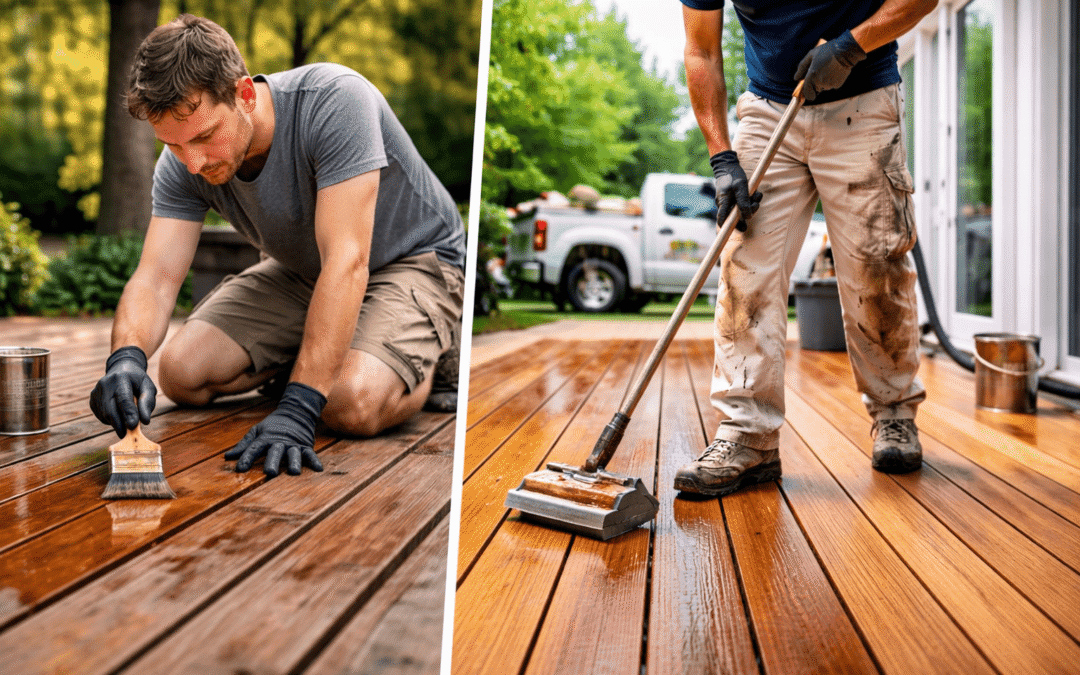
Staining a deck looks simple until you’re halfway through the project with sore shoulders, uneven color, and weather that won’t cooperate. The truth is that deck staining can go two very different ways. Done right, it refreshes your outdoor space, protects the wood, and helps your deck last longer. Done wrong, it can peel, turn blotchy, or fail within a season forcing you to strip and redo everything.
So the real question isn’t just “Can I stain my deck myself?” It’s whether DIY makes sense for your deck size, condition, time, and expectations or whether hiring a professional will save you money and frustration in the long run. This guide breaks down the pros, cons, real costs, and common mistakes so you can make the right call.
Quick Answer: DIY or Pro?
DIY deck staining usually makes sense when your deck is small, fairly new, and in decent condition especially if you have time for proper cleaning, light sanding, and careful application. Professional deck staining is typically the smarter route when the deck is large, multi-level, heavily weathered, previously coated, or when you want the most consistent, durable results with less risk of peeling or premature failure.
If you’re on the fence, the deciding factor is almost always prep. Stain doesn’t fail because homeowners pick the “wrong color.” It fails because the surface wasn’t properly cleaned, dried, sanded, or compatible with the product being applied.
DIY Deck Staining: Pros, Cons, and Who It’s For
DIY deck staining can be a great project if you approach it like a real job—not a quick weekend task. The upside is obvious: you’ll save on labor costs and control your schedule. Many homeowners also enjoy the satisfaction of improving their property with their own hands.
The tradeoff is that staining isn’t just “putting color on wood.” The majority of the effort is in preparation, and that’s where DIY jobs often go sideways.
DIY Pros
DIY staining offers lower upfront cost because you’re mainly paying for materials. You can choose your own timing, split the project across multiple days, and work at your own pace. For small decks, it can be a reasonable way to refresh the space without hiring help.
DIY Cons (Where People Get Burned)
Deck staining is labor-intensive. You may need to clean, brighten, sand, repair boards, and protect surrounding surfaces before you even open the stain. If the deck has uneven wood condition, old coatings, or areas that absorb stain differently, you can end up with blotchy color. If the wood is too wet, or you apply too much stain, you can trap moisture and cause peeling. If the weather shifts, rain or humidity can ruin curing and leave sticky areas.
DIY is also risky when you don’t know what’s already on the deck. Switching from one type of product to another (for example, from a film-forming coating to a penetrating stain) can require stripping and sanding to prevent failure. Many DIY mistakes aren’t obvious until weeks later, which makes them expensive to fix.
DIY Is Best For
DIY is best for small, simple decks with minimal railings, fairly uniform boards, and no major peeling. It’s also a better fit for homeowners who have moderate DIY skills, enjoy detail work, and have a flexible schedule to wait for the right weather window.
The Real Cost of DIY Deck Staining
One reason DIY looks attractive is that people compare a professional quote to the price of a few gallons of stain. That comparison isn’t realistic. Materials are only part of the cost, and tools and prep supplies add up quickly.
Beyond stain, you may need deck cleaner, a wood brightener, and mildew treatment depending on the deck’s condition. You’ll likely need brushes, rollers, stain pads, buckets, painter’s tape, plastic sheeting, drop cloths, and rags. If your deck needs sanding and many do you may need to rent a sander or buy sanding tools and multiple grits of paper.
If you don’t own a pressure washer, you may rent one, and if you do own one, you still need to know how to use it without damaging the wood. Over-pressure can fuzz the surface and create uneven absorption. Repairs can also surprise you: loose boards, rotted ends, wobbly rails, popped fasteners, and cracked spindles can turn a “stain job” into a light carpentry project.
And then there’s time. A proper DIY stain job often takes multiple days: one for cleaning, one for drying, and one for staining sometimes longer if sanding or stripping is required. If you value your weekends and want to avoid a project stretching across weather delays, professional staining becomes more appealing.
Professional Deck Staining: Pros, Cons, and Who It’s For
Professional deck staining isn’t just paying someone to apply stain. You’re paying for process control—proper surface preparation, correct product selection, efficient application, and a plan that produces consistent results.
Professional Pros
The biggest advantage is a more durable, even finish. Professionals understand how different woods absorb stain, how to prep for adhesion, and how to apply stain in a way that avoids lap marks, shiny spots, and uneven coverage. They typically complete the job faster and handle details that homeowners often miss like end grain, rail edges, stair corners, and transitions.
Pros also tend to have a better eye for what the deck actually needs. Some decks require cleaning and a light sand. Others require stripping. Some should be treated with a semi-transparent stain for natural beauty, while others need a solid stain to hide mismatched repairs. Getting that decision right often determines whether the finish lasts.
Many professional jobs also include some level of workmanship assurance. Even without promising a “forever finish,” reputable contractors stand behind their process and communicate realistic expectations.
Professional Cons
The downside is higher upfront cost. You’re paying for labor, equipment, materials, and expertise. Scheduling can also be a factor during peak season when everyone wants exterior work done at the same time. That said, the cost often makes sense when you consider the potential expense of fixing a failed DIY job.
Professional Is Best For
Professional staining is best for large decks, multi-level decks, decks with lots of railings and spindles, older wood that’s weathered or gray, and decks that have peeling or unknown existing coatings. It’s also ideal for homeowners who want a predictable, high-quality outcome without investing multiple weekends into the project.
How Much Does It Cost to Professionally Stain a Deck?
Professional deck staining costs vary widely based on deck size, complexity, and condition. Railings, stairs, spindles, benches, and multi-level layouts increase labor significantly. The condition of the wood matters even more. A deck that only needs cleaning and light prep costs far less than a deck that needs stripping, sanding, and repairs.
A common homeowner range for professional staining often falls around the low-to-mid thousands for typical decks, but the only honest way to price it is to evaluate the surface prep required and the number of coats needed. When comparing quotes, don’t just compare price compare what’s included. A lower quote can mean “clean and coat” with minimal prep, and that’s often where early failures start.
Prep Work Comparison: DIY vs Pro
If you want a clear view of the difference between DIY and professional results, look at prep. Prep isn’t glamorous, but it’s the foundation of a finish that lasts.
Cleaning
Both DIY and pros start with cleaning, but professionals are more likely to use the right cleaner for the deck’s condition and rinse thoroughly. Cleaning removes dirt, pollen, mildew, and residues that block penetration. If the deck is new, cleaning helps remove dust and mill glaze so stain bonds properly.
Sanding
Sanding is where many DIY jobs cut corners, usually because it’s the hardest part physically. Sanding can smooth raised grain, remove loose fibers, even out uneven absorption, and improve stain penetration. It’s especially important on older decks and on areas where stain has partially failed.
Stripping
If your deck has an old coating that’s peeling or incompatible with your new stain choice, stripping may be required. Skipping this step often leads to new stain failure, because the new product can’t properly penetrate or bond. This is one of the most expensive DIY mistakes, because it can force you into a full redo.
What Is the Best Method of Staining a Deck?
The best method is a controlled, step-by-step approach that priorities even absorption and avoids over-application.
A solid workflow usually looks like this: prepare the surface fully, let it dry properly, then apply stain in thin, even coats while working in manageable sections. On most decks, a brush offers the most control, especially around railings and edges. Rollers can speed up floor coverage, but should typically be followed by brushing to work stain into the wood and prevent puddling. Spraying can be efficient on large decks, but it requires skill and usually works best when combined with back-brushing to avoid lap marks and uneven sheen.
No matter the method, the key is not flooding the surface. Too much stain creates sticky areas, glossy patches, and uneven cure. Thin, even coverage wins almost every time.
What’s the Best Type of Stain for a Deck?
Choosing the right stain type depends on the deck’s condition and the look you want.
Transparent or “natural” stains highlight the wood grain beautifully but offer less pigment for UV protection and often require more maintenance. Semi-transparent stains are popular because they show grain while adding enough pigment to help resist sun damage. Solid stains provide the most uniform look and are often the best choice for older decks with repairs, discoloration, or mismatched boards.
If your deck is new and you love the natural wood appearance, semi-transparent is often a strong balance. If the deck is older and you want it to look fresh and consistent, solid stain may be the best path.
Biggest DIY Mistakes That Cause Peeling or Blotchy Results
Most staining failures follow predictable patterns. Sealing or staining too early before the wood is dry enough can trap moisture and lead to peeling. Staining during the wrong weather window can cause curing problems, especially if rain or heavy humidity hits shortly after application.
Over-application is another major issue. Many people assume “more product equals more protection,” but thick stain can create a sticky mess and fail prematurely. Skipping sanding when it’s needed leads to uneven absorption and short lifespan. Ignoring end grain is also common; board ends absorb moisture more easily and need careful coverage to prevent early deterioration.
What To Ask Before Hiring a Pro
A professional job is only as good as the contractor’s process. Before hiring, ask what prep is included cleaning only, sanding, stripping, or repairs. Ask which stain system they use, how many coats they apply, and how they handle railings and stairs. Ask how they protect landscaping and siding, what cure time to expect, and when you can safely use the deck again.
Clear answers usually indicate a clear process.
Chicago-Area Reality Check: Weather and Maintenance Expectations
In the Chicago area, deck staining has to survive a real seasonal cycle: humid summers, rain, freeze-thaw stress, snow, and spring melt. That means prep and product choice matter even more. Horizontal surfaces take the most punishment, so it’s normal for deck floors to need maintenance sooner than railings.
The best stain job is the one that matches reality: a finish that looks great, protects the wood, and has a reasonable maintenance plan. Whether you DIY or hire a pro, the goal should be a durable system, not a “one-and-done forever” expectation.
Core Improve: Deck Staining, Repair, and Outdoor Construction Services
Core Improve is a family-owned, fully insured construction company with 20+ years of experience serving Chicago and the surrounding suburbs across Cook County, Lake County, DuPage County, McHenry County, Kane County, Kendall County, DeKalb County, and Boone County. Our core categories include deck building and replacement, deck restoration, deck repair, and professional deck staining and sealing, plus fence building, fence repair, and fence staining. We take an inspection-first approach to every staining project checking for loose boards, soft spots, and rail issues, completing the right prep (cleaning, sanding, and board replacement when needed), and recommending the best stain type for your deck’s condition and exposure. For readers who want to go deeper, two helpful related posts to internal link here are “When to Seal a New Deck: Here’s What You Should Know” and “Deck Staining Trends: Popular Colors & Finishes (2025–2026).”
Final Thoughts: Make the Choice That Fits Your Deck
DIY deck staining can be a smart, cost-saving project when the deck is straightforward and you’re ready for the prep work. Professional staining is usually the better choice when the deck is large, complex, weathered, or previously coated or when you want reliable results with less risk of failure.
If you’re unsure, don’t decide based on stain price alone. Decide based on prep requirements, time, and how much you want to gamble with the finish. In most cases, the deck that lasts longer is the deck that was prepared correctly, stained at the right time, and applied with a consistent process.
FAQs: DIY vs Professional Deck Staining
How much does it cost to professionally stain a deck?
Cost depends on deck size, railings/stairs complexity, and especially prep needs. Cleaning-only jobs cost less than projects requiring repairs, stripping, or sanding.
Is DIY deck staining worth it?
It can be, if the deck is small, in good shape, and you have time for proper prep and the right weather window.
What is the best method of staining a deck?
Prep thoroughly, let the deck dry fully, and apply thin, even coats in manageable sections. Brush or back-brush for the most consistent penetration.
What’s the best type of stain for a deck?
Semi-transparent is great for showing wood grain while offering protection. Solid stain is often best for older decks with imperfections.
How long does deck stain last?
Longevity depends on exposure, prep, and stain type. Deck floors typically need maintenance sooner than railings.
Can I stain over old stain or peeling areas?
Sometimes, but peeling areas usually require stripping and sanding for the new stain to adhere and last.
Should I sand before staining my deck?
If the deck is older, rough, or has raised grain or uneven absorption, sanding can significantly improve the outcome.
Is spraying deck stain better than rolling or brushing?
Spraying can be faster, but it typically needs back-brushing to avoid lap marks and ensure proper penetration.
What weather is best for staining a deck?
A dry window with moderate temperatures and no rain in the forecast is ideal. Avoid extreme heat and high humidity if possible.
What does a professional staining quote usually include?
A quality quote should describe prep steps, stain type, number of coats, protection measures, and cure time expectations.
