
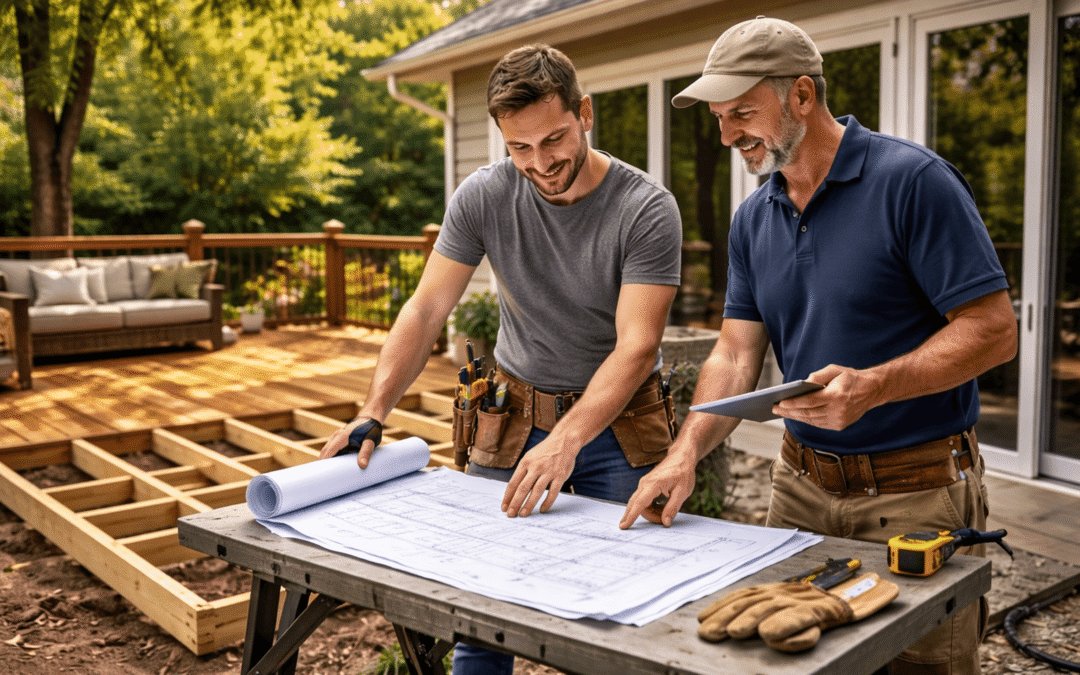
If you’re searching for deck builders in the Chicago suburbs, you’ll notice something quickly: almost everyone looks “professional” online. Great photos, bold claims, fast timelines, and “best price” promises are everywhere. But a deck isn’t a small cosmetic upgrade. It’s a structural project that has to survive Midwest weather, pass inspections, and stay safe for years. Choosing the right builder isn’t just about the lowest quote—it’s about credentials, local experience, detailed planning, and workmanship that holds up through Chicago-area freeze/thaw cycles.
This guide walks you through exactly how to choose a qualified deck builder in the suburbs, what to ask, what to verify, and how to compare estimates. If you follow this checklist, you’ll avoid the most common homeowner mistakes: permit problems, sloppy framing, premature board movement, surprise costs, and warranties that don’t mean much once the contractor is gone.
What a Qualified Deck Builder Looks Like in the Chicago Suburbs
Before you compare brands, ask yourself: what does “qualified” actually mean? A reputable deck contractor in the Chicago suburbs should be able to show proof of insurance, explain local permit requirements, provide a portfolio of similar work, and offer a clear written agreement that outlines exactly what they will build, how they will build it, and what happens if something changes.
Experience matters too. Deck building isn’t just carpentry. It’s understanding local codes, dealing with soil and frost conditions, building proper footings, managing drainage, selecting appropriate fasteners, and installing stair and railing systems that are safe and code-compliant. The best deck builders also communicate well, protect your property during construction, and stand behind their work.
Step 1: Verify Licensing, Bonding, and Insurance
When homeowners hire a contractor, they often assume “they must be legit if they have a website.” That’s not enough. In the Chicago suburbs, requirements can vary by municipality, and you want to make sure the builder meets your suburb’s standards.
Start by asking how the company is registered to do business and whether a local license or contractor registration is required in your town. Then move immediately to insurance. At minimum, you want general liability insurance. This protects you if something gets damaged—your home, your neighbor’s property, your landscaping, or anything else.
Also ask about workers’ compensation coverage. If someone is injured on your property and your contractor isn’t properly covered, you could be exposed to unnecessary risk. A reputable builder won’t hesitate to provide proof. If they dodge the question or act annoyed, that’s a red flag. Bonding can also be relevant depending on project size and municipal requirements. Even when bonding isn’t required, it can be another signal that the company operates professionally.
Step 2: Make Sure They Understand Permits and Local Inspections
Deck permits are not optional in many areas, and even when the rules are less strict, you should be cautious if a contractor says, “You don’t need a permit.” In the Chicago suburbs, deck projects often involve inspections for footings, framing, and final safety items like guardrails and stair geometry.
A reliable deck builder should be comfortable pulling permits, submitting drawings when needed, and scheduling inspections. They should also be able to explain what your suburb is likely to require—setbacks, height limits, railing rules, stairs, and footing depth for frost protection. Even if you’re doing a replacement deck, permits may still apply, especially if you change the footprint, height, or structural elements.
You don’t need to become a code expert, but you should expect your deck builder to guide the process confidently and transparently. If they avoid permits because it’s “too much paperwork,” they may be cutting other corners too.
Step 3: Prioritize Local Chicago-Suburbs Experience
When you’re looking for deck builders near me in the Chicago suburbs, local experience isn’t just a preference—it’s practical. A contractor who builds decks in your region understands common issues like shifting soil, drainage challenges, frost depth requirements, and the way Midwest seasons affect wood and fasteners over time.
Ask the builder how many decks they’ve built in the Chicago suburbs in the last year or two. Also ask if they’ve built in your specific area—Naperville, Wheaton, Arlington Heights, Schaumburg, Evanston-adjacent suburbs, or wherever you’re located. Builders who work in the suburbs regularly are more likely to anticipate inspection requirements and coordinate details smoothly.
A good question is, “What challenges do you see most often in decks built in this area?” Their answer will tell you whether they understand local realities or are giving generic responses that could apply anywhere in the country.
Step 4: Review Their Portfolio Like a Builder, Not Like Instagram
Most decks look great in wide-angle photos. The details are where quality shows up—or doesn’t. When you review a deck builder’s portfolio, look beyond the overall style and focus on craftsmanship.
Ask for close-ups of stairs, railing connections, picture framing, fascia boards, corners, transitions, and posts. Ask to see how they finish edges and how clean the lines are. A deck can look impressive from a distance and still have issues that cause squeaks, wobbles, or premature wear.
If possible, ask to visit a finished deck or watch a detailed walk-through video. You’re not being difficult—you’re making an informed investment. A reputable contractor will understand that.
Step 5: Check References the Right Way
Online reviews help, but references give you the most meaningful insight. Ask for two or three recent references from projects similar to yours—similar size, similar material, similar complexity. When you speak to references, don’t just ask, “Were you happy?” Ask questions that reveal the contractor’s process.
Ask whether the crew showed up consistently, whether the timeline matched what was promised, and how changes were handled. Ask whether the jobsite was kept clean and safe. Ask if there were any issues after completion and how the contractor responded. A builder’s willingness to fix small problems is often what separates good companies from frustrating ones.
If a contractor refuses to provide references, that’s a major warning sign.
Step 6: Confirm Material Expertise (Wood vs Composite)
Deck material decisions affect cost, maintenance, and long-term performance. A strong deck builder should be able to explain the tradeoffs clearly and help you choose the best option for your goals—not just push what’s easiest for them.
For wood decks, ask what lumber types they use and how they select boards. Ask how they handle moisture-related movement, sealing or staining timelines, and fasteners that resist corrosion. For composite decks, ask about expansion gaps, ventilation requirements, and manufacturer installation guidelines. Composite can be a great choice for lower maintenance, but only when installed correctly.
Also ask about railing systems. Railings impact both safety and cost, and they require precise installation. Whether you’re choosing wood rails, aluminum rails, cable systems, or a mix, your contractor should have real experience with your chosen style.
Step 7: Demand a Detailed, Itemized Estimate
A professional estimate should be written and itemized. If you get a quote that’s basically “Build deck — $XX,XXX,” you don’t have enough detail to compare bids or protect yourself if disagreements arise later.
A good estimate will clearly outline the scope: demolition or removal if needed, footings, framing, decking boards, railings, stairs, hardware, and finishing touches. It should include whether permits and drawings are included, and how disposal and cleanup are handled. It should also state material brands or grades, not just “composite” or “wood.”
When you compare bids, make sure you’re comparing apples to apples. One quote might include railings, lighting prep, and cleanup. Another might not. The lower number isn’t always the better deal—it can simply be missing pieces that become change orders later.
Step 8: Understand Deposits, Payment Schedules, and Red Flags
Every contractor structures payments differently, but you should always be cautious about large upfront deposits with vague timelines. A reasonable payment structure is usually milestone-based: deposit to schedule, payment after materials are delivered or after framing, and final payment after completion and walkthrough.
Ask the contractor to describe the payment schedule and what each payment covers. Also ask how change orders are handled. Change orders happen—design adjustments, material changes, repairs discovered during demo—but they should be written, priced, and approved before work proceeds.
Watch for red flags like cash-only demands, refusal to put details in writing, pressure tactics, or “today-only” discounts. A deck is not a car purchase. You should have time to review documents and make a calm decision.
Step 9: Ask About Warranty and Post-Build Service
Warranties can mean very different things depending on who offers them. Some cover workmanship. Some cover materials. Some are vague and difficult to claim. Ask what the warranty covers, how long it lasts, and what the service process is if something needs attention.
Also ask what’s excluded. Normal weathering and routine maintenance are usually not covered, and that’s reasonable. What you want to see is that the contractor takes workmanship seriously and has a clear process for addressing issues like loose rails, squeaks, or other installation-related concerns.
If you’re using composite materials, ask for manufacturer warranty documentation too. Installation errors can void warranties, so it matters that your builder follows guidelines.
Step 10: Timeline Planning and Communication Standards
In the suburbs, deck demand rises quickly in warm seasons. A professional builder should give you a realistic schedule and explain how weather affects the timeline. Ask for an estimated start date and a range for completion rather than a promise that sounds too perfect.
Ask who your point of contact will be. Will you speak directly with the owner, a project manager, or a crew lead? Communication matters because questions will come up: small layout adjustments, material confirmations, or planning around your household schedule.
Also ask about daily site cleanup. A good contractor protects your landscaping, keeps the work area safe, and does basic daily cleanup so your property isn’t left messy for weeks.
Step 11: What Drives Deck Costs in the Chicago Suburbs?
Deck pricing isn’t just about square footage. Several factors can change cost significantly. Height is a big one—elevated decks require stronger structure, more posts, and often more railing. Stairs add complexity, especially if they include landings or turns. Railing type can swing the price dramatically depending on design and material.
Deck condition matters too. If you’re replacing a deck, hidden issues like ledger damage, rot, or poor previous construction may require repairs. Material choice is also a major cost driver: pressure-treated wood is typically less expensive upfront, while composite can cost more but reduce ongoing maintenance needs.
Permits, drawings, inspections, and HOA approvals can also add time and cost. A trustworthy contractor will explain these elements upfront rather than surprising you later.
Step 12: A Simple “Hire / Don’t Hire” Checklist
You don’t need a giant spreadsheet to make a good decision. Use a simple checklist to keep it clear.
A builder is usually a strong candidate if they can provide proof of insurance and workers’ compensation, show local deck experience, explain permits and inspections clearly, provide an itemized written estimate, and use a written contract with a change-order process. Clear timelines, solid communication, and a workmanship warranty are also strong indicators.
Be cautious or walk away if they avoid permits, refuse to show proof of insurance, won’t provide references, push large upfront deposits without clear milestones, or give vague scope descriptions.
Why Homeowners Trust Core Improve
If you’re comparing deck builders in the Chicago suburbs and want a contractor that handles the full outdoor project—from structure to long-term protection—Core Improve is a family-owned, fully insured company with 20+ years of experience serving Cook, Lake, DuPage, McHenry, Kane, Kendall, DeKalb, and Boone Counties. We provide Deck Building & Deck Replacement with a craftsmanship-first approach, plus deck repair, restoration, and professional staining/sealing to help your investment last through Chicago-area seasons. We also offer fence services, including Fence Staining and Repair, so your full outdoor space stays protected and cohesive. Our process is straightforward: inspect, plan, build, and support—so you know exactly what’s happening at every stage.
Final Thoughts: Choose the Process, Not the Price
Finding the right deck builder isn’t about picking the flashiest website or the cheapest bid. It’s about choosing a builder with a solid process: verified insurance, local experience, permit awareness, clear estimates, and consistent craftsmanship. In the Chicago suburbs, that process matters even more because decks have to survive real seasonal extremes.
FAQs: Choosing Deck Builders in the Chicago Suburbs
Do deck builders in the Chicago suburbs need to be licensed?
Requirements vary by suburb. Some towns require contractor registration, licensing, or specific documentation. A reputable builder should know what your suburb requires and be able to comply.
Will a deck builder pull permits in Naperville, Wheaton, or other suburbs?
A professional deck builder should be willing to handle permits and coordinate inspections. If they insist permits aren’t needed without checking your town’s requirements, that’s a red flag.
What insurance should a deck contractor have?
At minimum, general liability insurance and workers’ compensation coverage. This protects you and the contractor’s crew during the project.
How do I compare deck builder estimates?
Compare scope details, material specifications, railing and stair inclusions, permit handling, timeline, and cleanup—not just total price. Make sure bids cover the same work.
What’s a fair deposit for a deck project?
Deposits vary, but you should expect a milestone-based payment schedule. Be cautious of very large upfront deposits without clear deliverables tied to each payment.
Wood vs composite: what’s best for Chicago weather?
Both can perform well when built correctly. Wood may require more ongoing maintenance like staining/sealing, while composite can reduce maintenance but must be installed to manufacturer specs.
How long does it take to build a deck in the suburbs?
It depends on size, complexity, permitting, and weather. Your builder should provide a realistic range and explain what could cause delays.
What are the biggest red flags when hiring a deck contractor?
Avoid contractors who won’t show proof of insurance, dodge permits, provide vague estimates, demand large cash deposits upfront, or refuse references.
Should I choose a builder who also offers staining and maintenance?
Often yes. Builders who also provide staining/sealing and repairs can help protect the deck long-term and keep everything consistent without you hunting for separate contractors later.
Can I replace a deck without changing the footprint and still need permits?
Possibly. Many suburbs require permits even for replacements, especially when structural elements are involved. Your builder should confirm this with your local building department.