

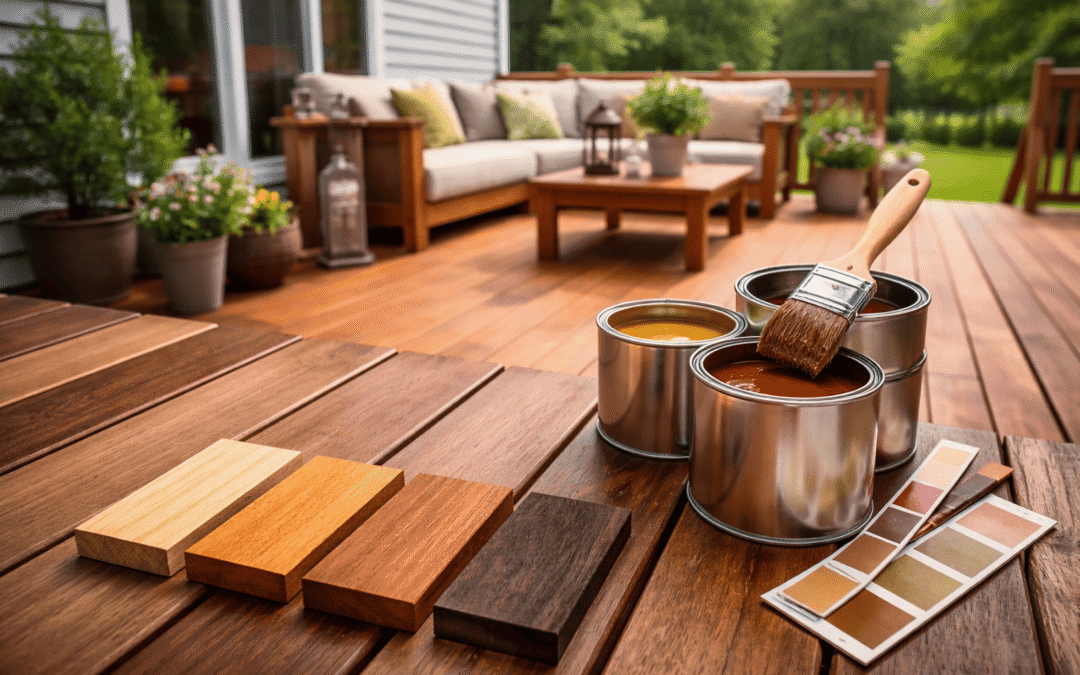
Choosing a deck stain color sounds easy—until you’re standing in front of dozens of options that all look great on a tiny sample card. The “best” stain color isn’t just the one you like most in the store. It’s the one that fits your home’s exterior, works with your deck’s wood and condition, holds up to your sun exposure, and still looks good in real outdoor light.
If you want to make a decision you won’t regret, the goal is simple: pick a color that feels intentional, practical, and timeless—then test it the right way before committing.
Below is a step-by-step process you can follow to choose the right deck stain color with confidence.
Start with Your Home’s Exterior Palette (The “Fixed” Colors)
Your deck is part of your home’s overall look. The easiest way to choose a stain color that looks natural is to start with the parts of your home you’re not changing anytime soon. These are your “fixed” colors:
Roof color
Siding or brick/stone tone
Trim color
Window frames, gutters, railings, and nearby hardscaping
Once you identify these, you’ll quickly narrow down what looks cohesive. A deck can either blend into your home’s palette or create contrast. Both approaches work—what matters is that it looks like a deliberate choice, not an accident.
Blend In vs. Stand Out
If you want your deck to feel like an extension of the home, choose a stain that’s close to the siding or trim color. This is especially popular for classic homes and traditional neighborhoods because it feels balanced and familiar.
If you want the deck to make more of a statement, you can choose a contrasting stain—like a deeper brown, charcoal, or modern grey—especially if your home exterior is lighter. Contrast can look amazing, but it needs to “fit” the home’s style and not fight the rest of your exterior.
A quick rule that helps: if your home already has strong accents (dark windows, black railings, bold front door), contrast stains often look more natural. If your exterior is softer and neutral, a blended stain usually feels more timeless.
Choose Opacity First, Then Choose Color
One of the biggest homeowner mistakes is choosing a stain color first and figuring out opacity later. In reality, opacity matters just as much as color because it determines how much wood grain you’ll see and how well the stain hides imperfections.
If your deck is brand new, you can often choose from more transparency options. If your deck is older, patched, weathered, or stained unevenly, you may need more coverage to get an even-looking finish.
Here’s how opacity typically works:
Clear or Transparent
This option shows the most natural wood grain, but it offers the least “cover” for imperfections. It can look beautiful on high-quality wood that’s still in great condition, but it generally requires more maintenance and won’t hide wear.
Semi-Transparent
Semi-transparent stain adds color while still letting grain show through. It’s one of the most popular options because it balances appearance and protection. On many decks, it gives you that “real wood” look without feeling too raw or uneven.
Semi-Solid or Solid
Semi-solid and solid stains cover more of the wood surface. These are often the best choice for older decks, decks with repairs, or wood that has visible inconsistencies. If your deck has boards replaced over time, different levels of sun fading, or patched spots, a more solid stain can make everything look clean and uniform.
If your deck is already showing age, choosing higher opacity is often the difference between “fresh and consistent” and “patchy and frustrating.”
Match the Undertones: Warm vs. Cool
Once you know the opacity level that fits your deck, you can start narrowing down the color family. This is where undertones matter.
Many stain colors look similar on a chart, but they lean either warm (gold, red, amber) or cool (grey, ash, charcoal). The best stain choices usually match your home’s undertones.
If Your Home is Warm-Toned
Warm-toned homes often include beige, tan, cream, warm white, yellow tones, or traditional red/brown brick. Warm wood stains usually feel most natural here—cedar, chestnut, honey, walnut, and earthy browns.
If Your Home is Cool-Toned
Cool-toned homes often include grey siding, white with black accents, blue-grey tones, modern finishes, or cooler stone. Greys, weathered greys, charcoals, and deeper brown neutrals can look sharp and modern.
If You Have Brick
Brick homes can go several directions depending on the brick tone. Many homeowners love warm browns and cedar tones because they feel grounded and classic. But darker neutrals can also look great when the trim and accents support the look.
The goal is to avoid a stain that “clashes” with your home. If your home is warm and your deck is very cool grey, the deck can feel disconnected. If your home is cool and your stain is very orange-heavy, it can feel dated or out of place.
Consider Sun, Shade, and Heat
Decks don’t behave like walls. They’re flat, they get direct sun, and you physically use them. That means your stain color affects comfort and long-term appearance.
Darker Stains Absorb More Heat
This is one of the biggest real-life factors people forget. Dark stains can look sleek and modern, but they can make a deck noticeably hotter in full sun. If your deck gets strong afternoon sun and you spend time barefoot or have kids and pets, this matters.
Shade Can Change a Color Completely
A stain that looks perfect in sunlight can look much darker (or even muddy) in shade. If your deck is surrounded by trees or shaded by the house, testing your stain in real conditions is essential.
Sun Exposure Impacts Wear
Decks that get full sun all day tend to show weathering faster. Your choice of opacity and quality of prep work matters more than choosing the “perfect” color. A slightly more protective finish and solid preparation often outlasts a more delicate look.
Pick a Color Family That Works in Most Homes
If you want a color that usually looks good across many exterior styles, start with the safest “best-seller” families. These aren’t boring—they’re proven.
Natural Cedar and Warm Wood Tones
These feel classic and inviting. They work with many homes because they look “right” outdoors. They’re especially popular when homeowners want their deck to feel natural and timeless.
Medium Browns (Walnut / Chestnut Range)
Medium browns tend to hide dirt well and age gracefully. They’re also forgiving with landscaping, outdoor furniture, and seasonal changes.
Weathered Greys and Charcoals
Greys can look modern and clean, especially with white, grey, or black-accented homes. The key is choosing the right undertone so the deck doesn’t look washed out or too cold.
These families also give you flexibility if you plan to update outdoor furniture, railings, or accessories later.
Testing Is Non-Negotiable (Do This the Right Way)
If you want to avoid regret, testing is where you win. A deck stain chart is only a rough suggestion. The final color depends on:
Wood species
Wood age
Previous stain or coating
Sun exposure
Prep work
Moisture and porosity
A stain that looks “perfect” on a store board can look completely different on your deck.
A Simple Testing Method
Choose 2–3 final candidates. Then test them on your deck in a discreet spot, like a corner or behind furniture. Apply enough stain to truly see the tone—not just a thin wipe.
Look at the samples:
In morning light
In midday sun
In evening light
In shade
This matters because outdoor light changes undertones dramatically. Many homeowners make a decision too quickly and only see the “real” result after the full deck is done.
Also, let the sample dry fully before judging. Some stains deepen after drying, and the final look can change more than you expect.
Keep Your Neighbourhood and Style in Mind
Your home doesn’t exist in isolation. If you’re in a neighbourhood with a consistent style—classic brick homes, traditional suburban palettes, modern new builds—your deck stain should feel like it belongs.
That doesn’t mean you can’t be creative. It just means you’ll get the best resale-friendly, timeless result when your deck matches the tone of the home and the overall style of the property.
A modern charcoal deck can be stunning on a crisp white home with black trim. The same charcoal might feel harsh on a warm-toned traditional brick home unless the accents support it.
If resale matters, aim for “widely appealing.” Neutral wood tones, medium browns, and tasteful greys usually land in the safest zone.
Think About Maintenance Before You Commit
Deck stain color isn’t just about looks—it also affects how often you’ll want to recoat and how the deck will look between maintenance cycles.
Very light stains can show dirt and footprints more easily.
Very dark stains can show dust, pollen, and fading more noticeably in some conditions.
Mid-tone stains often strike the best balance for lived-in outdoor spaces.
Your deck is a functional surface. If you host often, have pets, or deal with a lot of trees and pollen, the most “perfect-looking” color might not be the most practical for your lifestyle.
Minimal “Do This / Avoid This” Checklist
Here’s a quick way to sanity-check your choice before moving forward:
Choose opacity based on deck condition, not just aesthetics.
Match stain undertones to your home (warm with warm, cool with cool).
Test 2–3 colours on your actual deck in different lighting.
Avoid extremes (super dark or super orange) unless your home style supports it.
Think comfort: dark stains can make hot decks in full sun.
When to Get Help (And Why It Saves Money)
If your deck has old stain layers, peeling areas, uneven colouring, or a mix of replaced boards, colour selection becomes more complicated. In those cases, the best result often comes from pairing the right stain choice with the right preparation plan.
Good prep is what makes the colour look even and last longer. If prep is rushed, even the best stain in the world will look uneven and wear faster.
If you want a deck stain colour that looks clean, consistent, and professional, especially across Chicago’s changing seasons, it’s worth having an experienced team inspect the wood condition, recommend the right opacity, and guide the colour selection based on your home exterior.
FAQs: Choosing Deck Stain Colors
How do I pick the right deck stain color?
Start with your home’s fixed exterior features (roof, siding/brick, trim). Choose stain opacity based on your deck’s condition, then test 2–3 colours on your actual deck in sun and shade before committing.
Should your deck be lighter or darker than your house?
Either can work. A safe approach is choosing a stain that’s close to your home’s trim or siding and slightly lighter or darker for contrast—while keeping the same warm or cool undertone.
What is the most popular color for a deck?
Natural wood tones (cedar-style), medium browns (walnut/chestnut), and modern greys/charcoals are consistently popular because they pair well with many home exteriors.
How do I choose a wood stain color if my deck has repairs or mixed boards?
Consider a more opaque stain (semi-solid or solid) for a more uniform look. Always test your sample on both the older boards and the repaired sections so you can see how the colour changes.
Do darker deck stains make the deck hotter?
Yes. Darker stains tend to absorb more heat, which can make decks uncomfortable in full sun. If comfort matters, consider lighter tones or mid-tone browns/greys.
What’s the best way to test deck stain colors?
Apply sample patches directly on your deck and view them at different times of day in both sun and shade. Let the stain dry fully before judging the final tone.
