

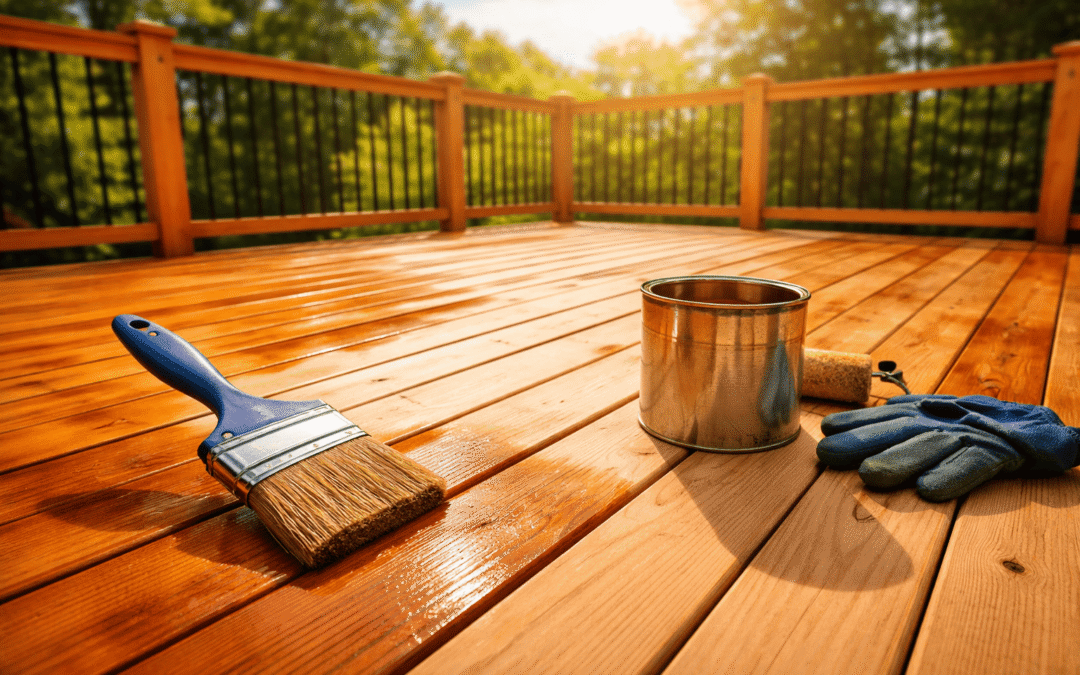
A brand-new deck is one of the best upgrades you can make to your home. It adds outdoor living space, boosts curb appeal, and creates a place you’ll actually use for years. But once the boards are down, most homeowners immediately ask the same question:
When can I stain it?
The timing matters more than people think. Staining too soon can trap moisture and lead to peeling, blotchy colour, and a finish that doesn’t last. Waiting too long can leave the wood exposed to sun, rain, and grime, which makes prep harder and can shorten the life of the boards.
The “right time” is a mix of three things: your deck’s wood type, how dry the boards are, and the weather window you choose. Let’s break it down in a way that’s simple, practical, and easy to follow.
So, What Is the Right Time to Stain Your New Deck?
The right time to stain a new deck is after the wood has had time to dry and the surface is ready to absorb stain evenly.
Stain needs to soak into the wood to protect it. If the boards are still holding too much moisture, the stain can’t penetrate properly. That’s when you see problems like:
-
Peeling or flaking
-
Patchy or uneven colour
-
A finish that fades fast
-
Poor water resistance
So the goal isn’t just “pick a date.” The goal is get the deck to the point where it will accept stain the right way—then apply it during stable, mild weather.
Step 1: Know What Your Deck Is Made Of
Different decking materials behave differently. If you’re not sure what was used, this is the first thing to confirm. It changes your timeline.
Pressure-Treated Wood (Most Common in Chicagoland)
Pressure-treated lumber is popular because it’s affordable and built for outdoor use. The trade-off is moisture.
New pressure-treated boards often start out “wet” from the treatment process. They need time for that moisture to leave the wood before stain will absorb well.
In real-world conditions, pressure-treated decks usually need several weeks before staining, and sometimes longer depending on sun exposure and rainfall.
Cedar Decks
Cedar is naturally resistant to rot and insects, and it often dries faster than pressure-treated wood. Some cedar can be stained sooner—especially if it was dry when installed—but it still benefits from proper prep and testing.
Hardwood Decks (Like IPE)
Hardwoods are dense and durable, but they can be tricky because they don’t absorb products the same way as softer woods. Timing and prep matter even more here, and using the right stain type is important for penetration.
Kiln-Dried Lumber (Including KDAT)
Kiln-dried boards start with less moisture, which can shorten the waiting period. Even then, you still want to test readiness before staining. “Kiln-dried” doesn’t automatically mean “ready today.”
What About Composite Decks?
Most composite decking is not stained like wood. It’s typically cleaned and maintained differently. If you have composite boards but wood railings or steps, you may stain the wood components while maintaining the composite separately.
Step 2: How Long Should You Wait Before Staining a New Deck?
Here’s the truth: waiting periods online can be all over the place. That’s because wood doesn’t dry on a schedule—it dries based on exposure and conditions.
Still, you can use these ranges as a starting point.
Typical Waiting Windows (Starting Points)
-
Pressure-treated wood: often around 4–12 weeks
-
Cedar: can be sooner if dry, but many homeowners still wait a few weeks
-
Kiln-dried boards: often a few weeks to 1–2 months
-
Hardwoods: depends heavily on species and product choice—testing is key
Your deck’s location matters too. A deck that gets full sun and airflow will dry faster than one surrounded by trees, shade, or tall fencing. Heavy rain cycles can reset your progress.
That’s why Core Improve recommends a test-based approach instead of guessing.
Step 3: How To Tell If Your New Deck Is Ready To Stain
This is the “don’t mess it up” section. Before you stain, you want proof the wood is ready.
The Water Drop Test (Simple And Fast)
Sprinkle or drip a small amount of water onto a few deck boards in different areas.
If the water soaks in within a short time, your wood is absorbing—and that’s a good sign.
If the water beads up and sits on top, the wood is still too wet or the surface isn’t ready yet.
Do this test in multiple spots. Corners, shaded sections, and boards near landscaping often hold moisture longer.
Moisture Meter Test (Best For Certainty)
If you want the most confident answer, a moisture meter is a great tool. It gives you a clear reading so you’re not relying only on visuals.
You’re looking for wood that’s dry enough to absorb stain consistently. If you’re close but not there yet, waiting a bit longer can save you from a re-do later.
Visual Signs That Support The Tests
These aren’t “proof,” but they’re helpful cues:
-
The boards have lightened in colour compared to install day
-
The surface feels less damp or “cool” in the morning
-
After rain, the deck dries quickly rather than staying dark for long
Step 4: Pick The Right Weather Window (Chicago Reality)
Even if your wood is ready, the weather can ruin a staining job if you pick the wrong day.
In the Chicago area, you want a stretch of mild temperatures and stable dry conditions.
Temperature
A safe general range for deck staining is moderate temperatures—not too hot, not too cold. When it’s too cold, drying slows and curing can fail. When it’s too hot, stain can dry too fast on the surface and leave lap marks.
Rain And Humidity
Try to plan staining when there’s no rain expected for at least 24–48 hours after application. If you can get a longer dry window, even better.
Humidity matters too. High humidity can slow drying and increase the chance of tackiness or uneven curing.
Sunlight And Wind
It sounds strange, but blazing sunny days are not always the best day to stain.
Direct sun can cause stain to dry too quickly, leading to overlap lines and uneven penetration. Wind can blow dust, pollen, or debris onto wet stain.
In many cases, the best results come from a mild day with partial shade or a plan to stain sections when they’re not in full direct sun.
Best Seasons In Chicagoland
Most homeowners have the most consistent success in:
-
Late spring
-
Early fall
These seasons often offer stable temperatures and lower extremes. Mid-summer can still work, but timing matters more because of the heat and strong sun. Late fall can be risky if temperatures drop quickly or you deal with heavy dew.
Step 5: Prep Your New Deck The Right Way
Even when a deck is “new,” it still needs proper prep. Jobsite dust, light grime, and surface issues can reduce stain performance.
Clean The Surface
A proper cleaning helps remove dirt, pollen, and residue from construction. Cleaning isn’t just about appearance—it creates the right surface for absorption.
Watch For Mill Glaze
Some new boards have a slightly shiny surface from the milling process. That surface can resist stain penetration. In certain cases, light sanding or the right prep approach helps the stain bond evenly.
Fix Issues Before You Stain
If you notice cracked boards, raised fasteners, or loose railings, handle those first. Staining over problems doesn’t solve them—it seals them in.
Step 6: Choosing The Right Stain For A New Deck
The best stain depends on the look you want and the level of protection your deck needs.
Transparent Vs. Semi-Transparent Vs. Solid
- Transparent stains highlight natural grain but offer less UV protection.
- Semi-transparent stains balance appearance and durability.
- Solid stains offer the strongest colour and UV resistance.
Oil-Based Vs. Water-Based
Both can work when applied correctly. What matters most is proper prep, correct timing, and professional-grade products.
One Coat Or Two?
More isn’t always better. The right number of coats depends on the stain system and wood condition.
Common Mistakes (And How To Avoid Them)
- Staining too early traps moisture.
- Staining before rain causes wash-off or streaking.
- Skipping prep leads to poor adhesion.
- Working in direct sun causes lap marks and uneven colour.
Avoiding these mistakes is often the difference between a deck that lasts years and one that needs rework.
A Simple “Right Time To Stain” Checklist
Before you stain, make sure:
-
You know your deck material
-
The water drop test shows absorption
-
The surface is clean and prepped
-
The forecast shows a dry window
-
Temperatures are mild
-
You’ve chosen the right stain
How Core Improve Helps Homeowners Get It Right
At Core Improve, deck staining isn’t an afterthought—it’s part of a complete outdoor protection system. We’re a family-owned, fully insured company with 20+ years of experience serving Chicago and surrounding counties.
Our deck staining process includes inspection, surface preparation, stain selection, and professional application designed for Midwest weather.
If you’re planning to stain a new deck, we help you confirm the right timing so you don’t stain too early or waste your investment.
Learn more about our professional deck staining and repair services and how we protect new and existing decks.
When To Call A Pro
Professional staining is a smart choice if your deck is large, multi-level, complex, or if you’re dealing with tight weather windows. It’s also ideal if you want consistent results without trial and error.
FAQs: Staining A New Deck
How Long Should You Wait Before Staining A New Deck?
It depends on the wood type and drying conditions. Pressure-treated decks often need several weeks, while other materials may be ready sooner.
What Happens If I Stain My Deck Too Early?
Staining too early can cause peeling, uneven colour, and early failure.
How Do I Know My Deck Is Ready To Stain?
Use the water drop test. If water soaks in rather than beads, the deck is closer to ready.
Is October Too Late To Stain A Deck In Illinois?
Not always. Stable temperatures and a dry forecast matter more than the calendar date.
What Is The Best Month To Stain A Deck?
Late spring and early fall usually provide the most consistent conditions in the Chicago area.
Do I Need To Sand A New Deck Before Staining?
Not always, but some boards benefit from light sanding depending on surface condition.
How Long Should Stain Dry Before Rain Or Foot Traffic?
Drying time depends on the product and conditions. Planning a solid dry window is essential.
Ready To Protect Your New Deck The Right Way?
If you want your deck stain to look great and last, timing and prep are everything. Core Improve helps homeowners choose the right window, prepare surfaces properly, and apply long-lasting finishes built for Chicago-area weather.
Call 847-778-6554 or request a free estimate today.
