
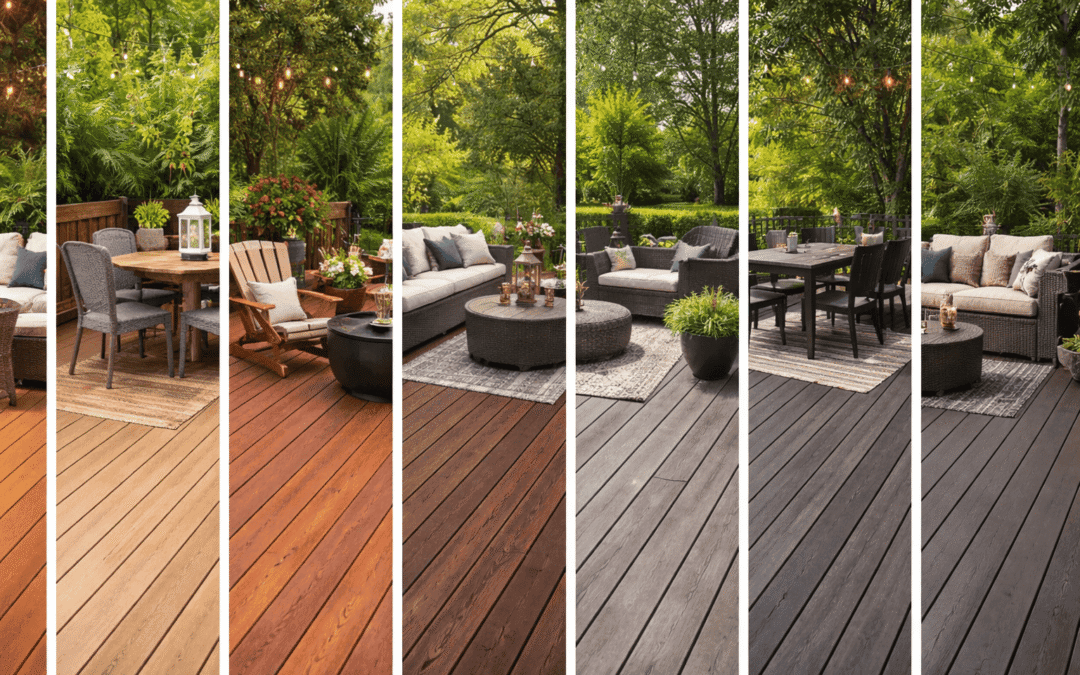
Deck staining trends in 2025–2026 are all about a more intentional, “designed” look without losing the warmth that makes outdoor spaces feel inviting. Homeowners are moving away from overly orange tones and high-gloss finishes, and leaning into natural, earthy color families with a modern edge. Soft grays, warm cedar and honey tones, and bold charcoals are leading the way. At the same time, finish choices are becoming more practical: many homeowners want the natural wood grain to show through, but they also want a finish that stands up to sun, rain, and foot traffic.
If you’re planning to stain a new deck or refresh an older one, the best results come from two decisions: picking the right color family for your home and choosing the finish type that matches the condition of your deck. This guide walks you through the trends, the “why” behind them, and how to choose a look you’ll still love in a few years.
2025–2026 Deck Stain Trends At A Glance
The big theme right now is “natural but elevated.” That means more sophisticated neutrals, fewer harsh undertones, and finishes that feel clean rather than shiny. Homeowners are also paying more attention to how stain looks with railings, furniture, siding, landscaping, and hardscapes.
Here’s what’s trending most in 2025–2026:
Modern grays are still very popular, especially light ash, weathered oak, and deeper charcoal tones. Warm, earthy stains cedar, honey, light walnut, and natural oak are in demand for a welcoming, timeless look. Dark, dramatic stains like espresso and black oak are making a comeback for homeowners who want contrast and a high-end feel. Alternative hues like navy and muted green are showing up more often for contemporary or coastal-inspired spaces.
Finish trends matter just as much as color. Semi-transparent finishes are the top pick for balancing wood-grain beauty with protection. Solid stains are chosen when homeowners want a uniform, modern look or need to hide imperfections. Clear or natural finishes are used when the goal is a rustic, barely-there look, but they come with higher maintenance expectations. And across all categories, low-VOC and water-based products are gaining popularity for their cleaner application experience and more eco-friendly appeal.
Trending Deck Stain Colors (2025–2026)
Gray remains the “go-to” modern deck color because it pairs well with almost any exterior style. The trend has shifted away from icy grays and toward grays with more natural, weathered undertones.
Light ash and silverwood tones are popular for homes with bright exteriors, modern architecture, and minimalist landscaping. They create a clean canvas and help outdoor furniture and décor stand out. Weathered oak and greige (gray-beige blends) are a favorite for homeowners who want gray without the cold feel. These shades work especially well with brick, stone, and warm-toned siding because they sit in the middle modern, but still natural.
Charcoal continues to trend because it creates a strong frame for your backyard. It looks sleek, hides a lot of everyday dirt, and pairs beautifully with black metal railings or white trim. If you want a modern statement without stepping into bold color territory, charcoal is often the safe “wow” choice.
Earthy, Natural Tones: Warm Cedar, Honey, Light Walnut
Natural wood tones are back in a big way because they make outdoor spaces feel warm and approachable. The trend here isn’t the bright orange cedar look from years past. It’s more about refined warmth cedar tones that look sun-kissed rather than orange, and honey tones that feel natural rather than yellow.
Warm cedar works especially well in shaded backyards where the deck can otherwise look dull. It brightens the space and gives the wood a “fresh built” appearance. Honey and natural oak tones are timeless, which makes them popular for homeowners who don’t want to chase trends every few years. Light walnut is a great middle-ground: richer than honey, softer than espresso, and flexible across many home styles.
If you want your deck to feel like an extension of a garden greens, stone paths, natural textures warm stains tend to blend best and create a more relaxed atmosphere.
Bold & Deep Tones: Dark Walnut, Espresso, Black Oak
Dark stains are surging again because they look dramatic and intentional, especially in contrast with lighter homes. Espresso and deep walnut give decks an elegant feel almost like an outdoor living room floor. Black oak and near-black tones are used for a striking, high-end look, especially when paired with modern railings, lighting, and structured landscaping.
Dark stains often photograph beautifully and look amazing in evening light. They’re also popular for homeowners who want a crisp visual edge between their home and yard. The tradeoff is that darker surfaces can show pollen, dust, and footprint patterns differently depending on the exact tone and sheen. That’s not a dealbreaker just something to consider if your deck gets heavy use.
Alternative Hues: Navy And Muted Green
If you’ve been seeing more decks with personality, you’re not imagining it. Navy and muted greens are trending because homeowners want something more custom than standard brown or gray, but still tasteful and timeless.
Navy works well for coastal-inspired or contemporary spaces, especially with white railings or light-colored outdoor furniture. Muted greens think sage, olive, or soft forest blend beautifully with landscaping and can look surprisingly natural when done correctly. These colors can be stunning, but they require a little more planning. Sampling matters more because lighting, siding color, and surrounding greenery can change how the stain reads once it’s across the full deck.
The Finish Trend That Matters Most: Semi-Transparent vs Solid
Choosing a finish is where many decks succeed or fail over time. A trendy color won’t look good if the finish type doesn’t match the wood’s condition or your expectations for maintenance.
Semi-Transparent: The Top Choice For Grain + Protection
Semi-transparent finishes are popular because they strike the balance most homeowners want: you still see the character of the wood grain, but you get enough pigment to help with UV protection and color stability. This finish is a great choice for newer decks, decks with attractive wood, or any homeowner who wants the deck to look “natural but refined.”
It’s also a good option if you want a modern gray or warm cedar that still looks like real wood. Semi-transparent finishes can highlight board variation in a way that looks authentic and premium. Just remember that horizontal surfaces take the most abuse from sun and foot traffic, so even the best finish will need maintenance. Semi-transparent is more about a beautiful wood look than hiding flaws.
Solid/Opaque: Modern, Uniform, And Ideal For Older Decks
Solid stains are trending because they give decks a clean, uniform appearance almost like painted wood, but designed specifically for deck use. Homeowners choose solid stain when they want a modern look, when the deck has repairs or boards that don’t match perfectly, or when the wood is weathered and uneven.
A solid finish can be the best option for older decks because it hides discoloration, patchwork repairs, and surface imperfections. It’s also a smart choice when you’re trying to reinvent the deck’s look completely, such as moving from an old faded brown into a contemporary charcoal.
Natural/Transparent: Rustic And Minimal, But Higher Maintenance
Natural or transparent finishes are used when homeowners want the wood grain to be the star and prefer a clean, rustic vibe. These looks can be beautiful, especially on quality wood and in shaded areas. The reality is that the less pigment you have, the more quickly sun exposure can fade the color and weather the wood. If you love the natural look and don’t mind refreshing the finish more often, this trend can work well.
Mixed Tones And Contrast: The “Designer Deck” Look
One of the most noticeable trends is how homeowners are using more than one stain tone to create a custom look. This isn’t about random contrast. It’s about subtle design choices that make a deck feel planned, not generic.
A popular approach is to use a slightly darker tone on the deck floor and a slightly lighter tone on rails or vertical features. Another option is a “picture frame” border: the outer edge of the deck is stained a shade darker to visually outline the space. This can look especially sharp with gray or charcoal tones.
You can also create a cohesive look by staying in the same color family and varying depth. For example, a warm cedar floor paired with a slightly deeper walnut tone on stairs or trim can feel rich without looking busy. The key is consistency: keep undertones aligned (warm with warm, cool with cool) and keep the finish sheen similar so it looks intentional.
Eco-Friendly Stains Are In Demand
Homeowners are increasingly asking about low-VOC and water-based stain options. For many people, it’s about comfort as much as sustainability less odor, easier cleanup, and a more pleasant application process. Water-based products have improved significantly over the years, and they can deliver great results when paired with proper prep and the right expectations.
Eco-friendly doesn’t mean “no maintenance,” and it doesn’t automatically mean “less durable.” The product choice needs to match the wood type, deck exposure, and your desired look. What matters most is using a deck-appropriate stain system and applying it correctly clean surface, proper dry time, and thin, even coats.
How To Choose A Trendy Color You Won’t Regret
Trends are helpful, but you don’t want your deck to feel dated next season. The safest way to pick a stain is to choose a trendy direction (gray, warm natural, bold dark, or alternative hue), then refine it based on your home’s undertones and your yard’s lighting.
Start by looking at your exterior from a distance. Is your home’s palette warm or cool? Warm-toned exteriors (beige, tan, warm gray, red brick) tend to look best with warm stains like cedar, honey, or walnut though greige can also work well. Cool-toned exteriors (crisp white, black, blue-gray, modern stone) often pair beautifully with ash gray, weathered oak, or charcoal.
Next, consider sun and shade. Light stains brighten shaded areas but can show grime sooner. Dark stains add drama and can feel luxurious, but they may show pollen and dust differently. If your deck is heavily used kids, pets, grilling, entertaining choose a finish and color that suits the reality of daily life, not just a Pinterest photo.
Finally, sample before you commit. Test your stain in at least two areas and look at it in morning and afternoon light. A color that looks perfect at noon can shift dramatically in golden-hour light or under shaded trees.
Popular Deck Color Ideas
If you want inspiration without overthinking it, here are some simple “looks” homeowners are choosing right now:
A modern minimal deck often uses light ash or greige with black railings and clean-lined outdoor furniture. A warm and natural look leans into cedar or honey tones with soft white trim and greenery-heavy landscaping. A high-contrast contemporary style pairs charcoal or black oak with metal railings and modern lighting. A coastal contemporary deck can look great in navy with light cushions and natural textures. A green and organic palette works well with muted green stain tones paired with stone paths, planters, and wood accents.
Core Improve: Our Deck Staining And Outdoor Construction Services
Core Improve is a family-owned, fully insured construction company with 20+ years of experience serving Chicago and the surrounding suburbs across Cook, Lake, DuPage, McHenry, Kane, Kendall, DeKalb, and Boone Counties. We specialise in outdoor projects that need real craftsmanship and long-term protection deck building and replacement, deck restoration, deck repair, and professional deck staining and sealing, as well as fence building, fence repair, and fence staining. Our approach is inspection-first: we check wood condition, identify boards or rail sections that should be replaced before staining, recommend the right finish for your deck’s age and exposure, and handle the full prep process (cleaning, sanding when needed, and proper application) so your stain looks better and lasts longer.
Final Thoughts: Choose The Trend That Fits Your Home And Lifestyle
Deck stain trends in 2025–2026 are exciting because they’re more flexible than ever. You can stay classic with warm cedar and honey tones, go modern with weathered grays, or make a statement with charcoal and espresso. The best choice is the one that fits your exterior, complements your yard, and matches how you actually use the space.
If you want a finish that looks great and lasts, focus on three things: pick a color with the right undertone, choose a finish that matches your deck’s condition, and don’t skip proper prep. When those pieces come together, your deck won’t just look trendy it will look intentionally designed and protected for the long haul.
FAQs: Deck Stain Colors And Finishes (2025–2026)
What is the most popular deck stain color in 2026?
Modern neutrals are leading: light ash, weathered oak/greige, and charcoal are among the most requested. Warm cedar and honey tones are also extremely popular for a timeless look.
Are gray deck stains still in style for 2025–2026?
Yes. The trend has shifted toward softer, more natural grays and greiges rather than icy, cool grays. Charcoal remains popular for a bold, modern look.
Is semi-transparent or solid stain better for decks?
Semi-transparent is best when you want to see natural wood grain and the deck is in good condition. Solid stain is best when the deck has repairs, uneven color, or you want a uniform modern finish.
What deck stain colors look best with a white house?
Charcoal and deep walnut create strong contrast for a modern look, while warm cedar and honey create a softer, classic style. Greige also pairs well if you want something neutral and balanced.
What stain color hides imperfections on an older deck?
Solid stains in mid-to-deep tones—like weathered gray, charcoal, espresso, or dark walnut—are great at masking uneven wood color and patched areas.
Do darker stains last longer on decks?
Darker stains can hold color well because they contain more pigment, which helps with UV resistance. The best longevity still depends on prep quality, product choice, and exposure.
Are water-based deck stains durable enough?
Many water-based stains perform very well today, especially when paired with proper prep and correct application. Choose a deck-specific system and match it to your wood and conditions.
How do I avoid a cedar stain turning orange?
Always sample first and pay attention to undertones. Choose a more muted, modern cedar tone instead of bright “golden” options, and test it in different lighting.
Can I mix stain tones for a custom look?
Yes. Mixing tones within the same color family (or using a slightly darker border) is a big trend. The key is keeping undertones consistent and using the same finish type.
What’s the best finish for a high-traffic deck?
Many high-traffic decks do well with semi-transparent or solid stain depending on condition. Solid stains can be ideal for older, busy decks because they provide more uniform coverage and hide wear better.