

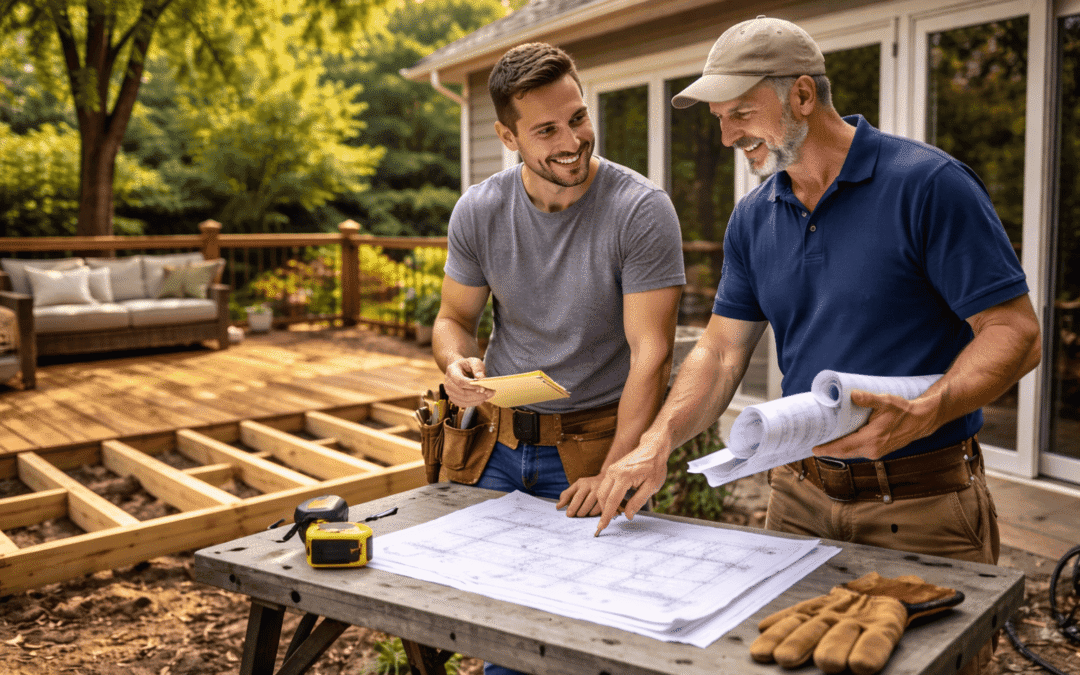
Searching for a deck builder near me can feel overwhelming fast. You’ll see dozens of “deck builders” with nice photos, big promises, and pricing that ranges from surprisingly cheap to shockingly high. The challenge is that decks aren’t like repainting a room. A deck is a structural project that affects safety, permits, inspections, and how well your outdoor space holds up through seasons of heat, rain, and freeze/thaw cycles.
The good news is that hiring a professional deck builder doesn’t have to be complicated. If you know what to verify and what questions to ask, you can filter out risky contractors quickly and confidently choose a builder who delivers high-quality work, communicates well, and stands behind the finished product. This guide covers the most important things to consider: credentials, experience, permits, materials, estimates, contracts, timelines, warranties, and the red flags homeowners should never ignore.
Quick Answer: What Makes a Professional Deck Builder?
A professional deck builder is more than someone who can cut boards and screw them down. A qualified builder should be properly licensed or registered for your area (where required), carry general liability insurance and worker’s compensation coverage, and have a strong local reputation backed by reviews and references. They should also provide a detailed written estimate, a clear contract, and a plan for permits and inspections.
If any of those elements are missing, you’re not just taking a small risk—you’re gambling with structural safety, long-term durability, and how expensive it might be to fix mistakes later.
1) Credentials and Reputation: Your First Filter
Deck builders may need specific licensing or contractor registration depending on the municipality. Even when a formal “license” isn’t required, reputable companies can still show a legitimate business registration and local compliance. Ask directly: “Are you licensed or registered to work in my municipality?” Then confirm the business name on their paperwork matches the name on the estimate and contract.
Be cautious with contractors who operate under multiple names, can’t provide a consistent business address, or avoid written documentation. If it’s unclear who you’re actually hiring, it’s harder to enforce warranties and resolve issues later.
Insurance: Non-Negotiable
Insurance isn’t a “nice to have.” It’s protection for you. Ask for proof of:
-
General liability insurance
-
Worker’s compensation coverage
Liability insurance helps protect you if property gets damaged. Worker’s comp matters because if someone is injured on your property and the contractor isn’t properly covered, the situation can get messy quickly. A professional builder won’t hesitate to provide current proof. If they stall, get defensive, or say “we’re covered” without documentation, treat that as a hard stop.
Reviews and References That Actually Matter
Online reviews can help you spot patterns: communication issues, missed deadlines, poor cleanup, or warranty complaints. But references are where you learn what it’s like to work with the contractor in real life.
Ask for 3–5 references from recent projects, ideally similar to yours in size and material type. When you call, skip vague questions like “Were you happy?” and ask specifics: Did they show up consistently? Did the timeline match what was promised? How did they handle changes or surprises? Was the jobsite safe and tidy? Did they fix small issues after completion without excuses?
A builder who refuses to provide references is telling you something, even if they don’t say it out loud.
Portfolio Review: Look Beyond “Pretty”
Most decks can look good in a wide photo. Quality shows up in details. Ask for close-ups of:
Stairs, railings, corners, fascia boards, transitions, and the connection points where the deck meets the house. You’re looking for clean lines, consistent spacing, solid railing attachment, and thoughtful finishing. If the builder only has distant glamour shots or stock-style photos, push for real project images or walk-through videos.
2) Experience and Expertise: Not All “Deck Builders” Are Equal
A deck needs proper framing, correct stair math, and railing safety that meets code. A handyman might be fine for small repairs, but for a long-lasting build or major replacement, you want a contractor who specialises in decks. Specialists understand how to build for long-term movement, how to manage moisture and drainage, and how to avoid the structural shortcuts that lead to bouncing decks, loose rails, or boards that warp prematurely.
Ask how many decks they build each year and whether decks are a core part of their business. The answer matters more than the marketing.
Local Knowledge Matters
Even if a deck is “just a deck,” local conditions and expectations make a difference. Soil, frost depth, drainage, and inspection standards can vary. A builder with local experience should be familiar with what inspectors typically look for and how to prevent common Midwest issues like water intrusion, shifting, and repeated seasonal expansion and contraction.
A good question is: “What do you build differently here compared to other areas?” If you get a thoughtful answer, that’s a positive sign. If you get a generic answer, it may indicate limited local experience.
Design Capabilities: Who’s Planning the Deck?
Some deck companies offer design help and layout guidance. Others expect you to provide plans. Neither is automatically wrong, but you need clarity early.
Ask whether the builder can help you decide stair placement, railing style, deck shape, and traffic flow. Ask if they can incorporate features like privacy screens, lighting readiness, or a future pergola plan. If you need engineered drawings or specific plans for permitting, ask who provides them and whether that cost is included.
3) Permits, Inspections, and HOA Approvals
Permits are one of the biggest stress points for homeowners—mostly because some contractors try to avoid them. In many places, decks require permits and inspections. A reputable builder should be comfortable with the process and willing to handle it, or at least coordinate it clearly.
Ask directly: Will you pull the permit? Will you provide drawings or specs if needed? Will you schedule inspections? What happens if the inspector requests a change?
If you live in a neighborhood with an HOA, approvals can add another step. Your builder should be willing to work within HOA requirements for materials, colors, railing types, and deck height limitations. When a contractor says “Don’t worry about permits” without checking your municipality or HOA, that’s a major red flag.
4) Materials and Build Quality: Wood vs Composite
Wood Decks: Classic, Strong, Maintenance-Dependent
Wood decks can look beautiful and feel traditional, but they typically require more ongoing maintenance such as staining and sealing. Ask what type of wood they recommend and why. Ask how they select boards, how they manage moisture, and what fasteners they use to reduce corrosion and long-term loosening.
If you’re choosing wood, also ask about long-term protection. A builder who builds wood decks regularly should be able to talk about when to seal or stain and how to protect the deck from early wear.
Composite Decks: Popular for Lower Maintenance
Composite is popular for homeowners looking for lower maintenance and a consistent look. But composite installation is not the same as wood installation. Expansion and contraction, correct gapping, ventilation, and joist spacing matter. Ask whether the contractor follows manufacturer guidelines and how they ensure installation meets those standards.
If you’re specifically searching for Trex deck installation or other composite systems, make sure your builder can show real examples of composite decks they’ve built and can explain what they do differently for composite compared to wood.
Railings, Stairs, and Safety Details
Railings and stairs are where poor workmanship becomes obvious. Ask what railing systems they install and what options are available. Make sure they understand safety requirements for railing height and spacing. For stairs, consistency is everything. Uneven stair rise/run measurements don’t just look sloppy—they can be unsafe.
5) Estimates: How to Compare Deck Builder Quotes
A professional estimate should be written and specific. If you receive a one-line quote that just lists a total price, you don’t have enough information to compare builders or protect yourself later.
A solid estimate should include the scope of work, materials, and what is included. It should specify demolition (if needed), footings, framing, decking boards, railing and stairs, hardware, cleanup, and disposal. It should also clarify whether permit handling, drawings, or inspection scheduling is included.
When comparing bids, make sure you’re comparing the same scope. One builder may include railings and stair upgrades while another does not. One may plan for proper site protection and cleanup while another leaves you with debris. The cheapest bid can become the most expensive once change orders start piling up.
6) Contract Essentials: What Must Be in Writing
Before you sign, the contract should clearly list:
The full scope of the project, the materials to be used (brand/line/color where relevant), the timeline, the payment schedule, permit responsibility, cleanup expectations, and warranty terms. It should also include a change-order process. If changes happen—and they often do—those changes should be approved in writing before work continues.
A strong contract is not “extra paperwork.” It’s the document that protects both sides and keeps the project organised.
7) Timeline, Crew, and Communication Standards
Ask who will manage your project day to day. Will you speak directly with the owner, a project manager, or a crew lead? Ask how often the crew will be on-site and what communication you can expect during the build.
Also ask how they protect your property: landscaping, siding, walkways, and nearby structures. Ask about daily cleanup, nail sweeps, and debris control. Professional jobsite management is part of a professional build.
8) Red Flags When Hiring a Deck Builder
If you want to avoid the biggest homeowner headaches, watch for these signs:
No proof of insurance, vague estimates, refusing to discuss permits, high-pressure sales tactics, or large upfront deposits with no clear milestones. Also pay attention to how they communicate during the estimate process. If they’re slow to respond, unclear, or disorganised before you sign, it rarely improves after the project starts.
Core Improve: Local Help for Deck Projects
If you’re looking for a contractor that handles the full scope—from structure to long-term protection—Core Improve is a family-owned, fully insured team serving Chicago and the surrounding suburbs. We take an inspection-first approach and help homeowners with Deck Building & Deck Replacement when the structure needs a fresh start, and we also provide Deck Staining & Deck Repair when the deck is worth restoring and protecting. The goal is simple: build it right, prep it right, and keep it looking great season after season.
Final Thoughts: Choose the Process, Not the Marketing
Hiring a deck builder doesn’t have to be stressful when you focus on the right things. Verify credentials and insurance, prioritise local experience, review details in the portfolio, confirm permit handling, compare itemised estimates, and insist on a clear contract.
FAQs: Hiring a Deck Builder
What should I look for when hiring a deck builder?
Look for insurance, local experience, a strong portfolio, clear references, and a detailed estimate and contract that includes permits, timeline, materials, and warranty terms.
How do I find a professional deck builder near me?
Start with local search, then narrow to builders with strong reviews, recent references, and proven work in your area. Verify insurance and ask how they handle permits.
Do deck builders need to be licensed and insured?
Insurance is essential. Licensing or registration depends on the municipality, but a professional builder should comply with your local requirements.
Will a deck installation company pull permits?
A reputable company should be willing to handle permits and inspections or coordinate the process clearly. Avoid contractors who dismiss permits without checking local rules.
How many quotes should I get from deck companies?
Two to three detailed quotes is usually enough to compare scope, materials, timeline, and process without getting overwhelmed.
What’s a fair deposit for hiring deck builders?
Expect a milestone-based payment schedule. Be cautious with large upfront deposits that aren’t tied to a clear scope or schedule.
How long does deck installation take?
It depends on size, complexity, weather, and permits. A builder should give a realistic range and explain what could cause delays.
Is composite decking worth it vs wood?
Composite can reduce maintenance and provide a consistent look, but it costs more upfront and must be installed correctly. Wood can be more affordable initially but usually needs more upkeep.
What are the biggest red flags when hiring a deck builder?
No proof of insurance, vague estimates, avoidance of permits, pressure tactics, and unclear payment schedules are among the biggest warning signs.
