
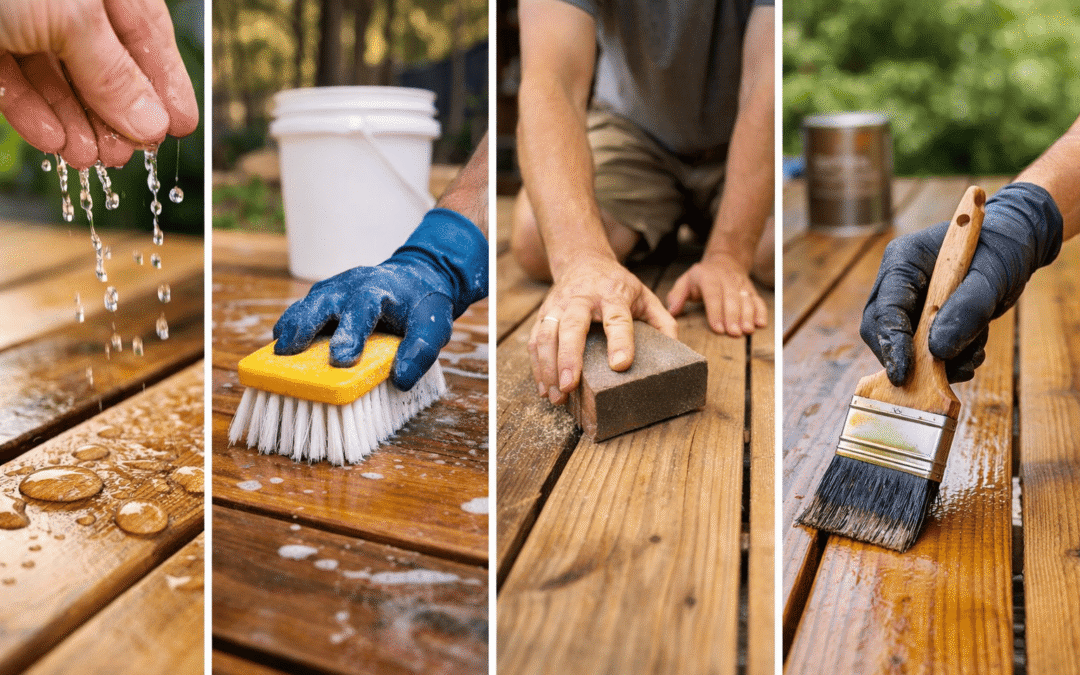
A new deck is one of the best upgrades you can make to your home, but it’s also one of the easiest projects to accidentally damage with good intentions. Sealing is essential for long-term durability, yet sealing too soon can create problems that look like “bad product” issues—peeling, blotchy color, sticky spots, and mildew that shows up fast. The truth is that the timing matters as much as the sealer itself. The goal is simple: let the wood dry enough to absorb protection, not trap moisture under it.
Why sealing too early causes peeling, mildew, and wasted money
Most new deck boards—especially pressure-treated lumber—contain a lot of moisture right after installation. During manufacturing, pressure-treated boards are saturated with preservatives and water, which is great for rot resistance but not great for immediate sealing. If you seal while the wood is still holding that moisture, you can trap it inside the boards. When the sun heats the deck, that trapped moisture tries to escape upward, and your coating can blister, peel, or look cloudy. Moisture that can’t escape also creates a friendly environment for mildew.
Sealing too late isn’t ideal either. Unprotected wood can dry out unevenly, develop surface checking (small cracks), fade quickly, and soak up stains in an inconsistent way later. The sweet spot is when the boards have had enough time to dry and open up, but not so long that they’ve already started to weather heavily. That’s why “wait a certain number of days” is only half the answer.
When to seal a new deck based on the material
The correct timeline depends on what your deck is made from. If you’re not sure which material you have, look at your invoice, ask your builder, or check the tags/markings on leftover boards. Still, these guidelines cover what most homeowners have.
Pressure-treated wood: usually wait 2–6 months
For most pressure-treated decks, the safest general window is 2 to 6 months after installation. Some newer “faster-drying” treated lumber can be ready sooner—sometimes around 30–60 days—but you don’t want to guess. Weather exposure matters a lot here. A deck installed during a warm, breezy stretch with plenty of sun may dry faster than one installed during a wet season or built in a shaded backyard.
If you seal pressure-treated boards too soon, you increase the chance of peeling and patchy absorption. If you wait until the deck is truly dry enough to drink in the sealer, you’ll get a cleaner finish and longer-lasting protection.
Cedar, redwood, and many hardwoods: often 1–2 weeks
Cedar and redwood typically don’t go through chemical pressure treatment, so their starting moisture content is often lower than pressure-treated pine. Many new cedar/redwood decks can be ready for sealing within 1 to 2 weeks, but they still need to pass a readiness test. Exotic hardwoods can vary; some are dense and oily, and that can affect how products penetrate.
Even though these woods may be “ready sooner,” the goal stays the same: the wood must be dry enough to absorb your sealer or stain evenly.
Composite/PVC decking: usually do not seal
Most composite and PVC decking products do not require sealing. Sealing them can create a surface film that attracts dirt, gets sticky, or interferes with the way the deck was designed to perform. In some cases, adding coatings can even void manufacturer warranties. If you have composite boards, focus on manufacturer-recommended cleaning and maintenance instead of sealing.
The water drop test: the easiest way to know your deck is ready
Calendars are helpful, but they’re not reliable by themselves. The best homeowner-friendly method is the water drop test (sometimes called the sprinkle test). It takes one minute and tells you more than guessing ever will.
Here’s how to do it. Sprinkle a small amount of water on several boards in different areas of your deck, including shady spots and boards that don’t get much sun. Watch what happens for about 30–60 seconds. If the water beads up and sits on the surface, the wood is still too wet or the surface is still too closed, and it’s not ready to absorb sealer well. If the water soaks in and darkens the wood, your deck is dry enough to accept a penetrating sealer or stain.
If it beads up, don’t panic. Wait about 3–4 weeks, then test again. This simple check prevents the most common sealing mistake: doing it too soon just because the deck “looks dry.”
Prep matters even on a brand-new deck
A lot of homeowners assume a new deck is clean and ready because it’s new. In reality, new decks often have construction dust, pollen, dirt from foot traffic, and a surface condition called mill glaze. Mill glaze is a smooth, slightly shiny layer created during manufacturing that can reduce absorption and cause uneven results if you coat over it without prep.
Clean the surface, even if it looks clean
A proper deck cleaner helps remove debris and opens up the pores so your product can penetrate. This is especially helpful if your deck has been sitting for a couple of months before you seal it, because it may have accumulated grime, pollen, or mild algae film even if it looks “fine” at a glance.
Light sanding can be a game-changer
Not every deck needs sanding, but many do benefit from a light sanding especially if boards feel rough, have stubborn mill glaze, or show raised grain after washing. A quick, light sanding can improve penetration, create a smoother finish, and reduce blotchiness. It also helps a new deck accept stain more evenly.
Let the deck dry fully after washing
After cleaning, give the deck time to dry. A typical guideline is 24–48 hours, but shaded decks or humid days can require longer. You want the wood to be dry before you seal, otherwise you’re back to the same issue: trapping moisture under the finish.
Best weather conditions for sealing a new deck
Sealers and stains need the right conditions to cure properly. The best results usually happen when temperatures are between 50°F and 90°F. You also want a forecast window with no rain for 24–48 hours, because rain can spot the finish or disrupt curing.
Avoid applying in direct, intense midday sunlight if you can. When a deck is baking hot, the product can dry too quickly on the surface (sometimes called “flash drying”) before it penetrates, which can lead to lap marks, uneven sheen, or shorter lifespan. Early morning or later afternoon often produces smoother, more consistent results.
Common sealing mistakes that ruin the finish
Most deck sealing disappointments come from a few predictable issues. If you avoid these, you’re already ahead of most DIY jobs.
Sealing too early is the big one, because it leads to peeling, blistering, and trapped moisture that can feed mildew. Another common issue is over-application. More product doesn’t mean more protection—often it means sticky spots, glossy patches, and an uneven look. Thin, even coats are usually the right approach, and the method (brush, roller, or spray with back-brushing) should be chosen based on the product and deck conditions.
Homeowners also forget the end-grain. The ends of boards are highly absorbent and are some of the most vulnerable points for moisture intrusion. If you want your deck to last, make sure those ends are fully coated.
Sealant vs stain vs paint: what should you use on a new deck?
This is where many people get stuck. “Sealer” and “stain” are often used interchangeably, but they’re not the same.
A clear sealer focuses on water repellency and some UV protection, but many clear products don’t prevent fading as well as tinted options. A semi-transparent stain adds pigment, which helps block UV damage while still showing wood grain. Solid stains provide a more painted look while remaining more breathable than typical exterior paint.
Paint is usually not recommended for new decks, especially pressure-treated ones, because it creates a film that can peel if moisture moves through the wood. For most homeowners who want both beauty and longevity, a penetrating stain/sealer system is often the most practical choice—especially when the goal is to protect wood from sun, water, and seasonal weather swings.
How often should you seal a deck?
Maintenance intervals depend on exposure and the product type. Clear sealers often need reapplication more frequently, while semi-transparent and solid stains can last longer. Decks with heavy sun exposure, lots of foot traffic, and harsh weather typically require more frequent maintenance than shaded decks that see light use.
Instead of relying only on a timeline, watch for signs like water no longer beading, visible fading, or dry-looking wood that seems to soak up moisture quickly. Regular inspections—especially after winter—help you stay ahead of damage and keep your deck looking sharp.
Do you need to seal the underside of a deck?
In most cases, you don’t need to fully seal the underside of a deck the same way you seal the top walking surface. The top surface and railings take the brunt of sun and water, and that’s where protection makes the biggest difference. That said, if you have exposed framing or specific moisture issues, there are situations where additional protection is useful. The right approach depends on airflow, height above grade, drainage, and how the deck was built.
About Core Improve and what we do
Core Improve is a family-owned, fully insured Chicago-area deck and fence company with 20+ years of experience, serving Cook, Lake, DuPage, McHenry, Kane, Kendall, DeKalb, and Boone Counties. We handle the full lifecycle of outdoor wood structures—deck building and replacement, deck restoration and repair, professional deck cleaning and staining/sealing, plus fence building, repair, and staining—so you don’t have to juggle multiple contractors. Whether your deck is brand new and needs the right sealing plan, or it’s older and needs boards replaced before staining, we start with an inspection-first approach and recommend the best material and finish options for long-term durability.
Quick checklist: when to seal a new deck
Build or install the deck, then plan your next steps with the right timeline. For pressure-treated decks, expect 30 days to 6 months depending on treatment and drying conditions. Use the water drop test to confirm readiness rather than relying only on the calendar. Clean the deck to remove dust and mill glaze, let it dry completely for 24–48 hours (or more as needed), then apply a penetrating, UV-resistant sealer or stain in thin, even coats. After application, give the finish time to cure and stay off the deck for 24–48 hours so you don’t leave marks or disrupt the coating.
FAQs: Sealing a New Deck
Do I need to seal my deck after staining?
Many stains already include sealing properties, especially products designed for decks. Whether you need an additional sealer depends on the stain type and manufacturer instructions. In most cases, applying a separate sealer on top of a stain isn’t necessary and can sometimes cause bonding issues.
When should I stain a new pressure-treated deck?
Treat pressure-treated decking like sealing: wait until it’s dry enough to absorb the product. For many decks that’s 2–6 months, but some newer treatments can be ready sooner. Use the water drop test to confirm.
Should I seal or stain my deck?
If you want the most UV protection, a stain (especially semi-transparent or solid) usually performs better than a clear sealer. If you want a very natural look, a clear or lightly tinted sealer can work, but expect more maintenance.
How often should you seal your deck?
It depends on the product and exposure. Many decks benefit from a maintenance cycle every 1–3 years, but high-sun, high-traffic decks may need attention sooner. Watch for fading and water absorption.
What’s the best deck sealer for old decks?
Older decks usually need more prep—cleaning, repairs, and sometimes sanding—before any product goes down. The best choice depends on the wood condition, previous coatings, and the look you want (clear vs tinted). A proper inspection helps avoid compatibility problems.
How do you seal a deck after power washing?
Power wash (or clean properly), then wait for full dry time—typically 24–48 hours minimum. After it’s dry, do the water drop test. If it soaks in, apply your sealer in thin, even coats.
Should I seal my deck after painting?
Usually no. Paint is already a surface coating. Adding sealer over paint can create adhesion problems unless it’s a system specifically designed for that purpose.
Do you need to seal the underside of a deck?
Typically the top boards and railings matter most. The underside may not need the same treatment unless moisture conditions, low clearance, or airflow issues suggest added protection.