
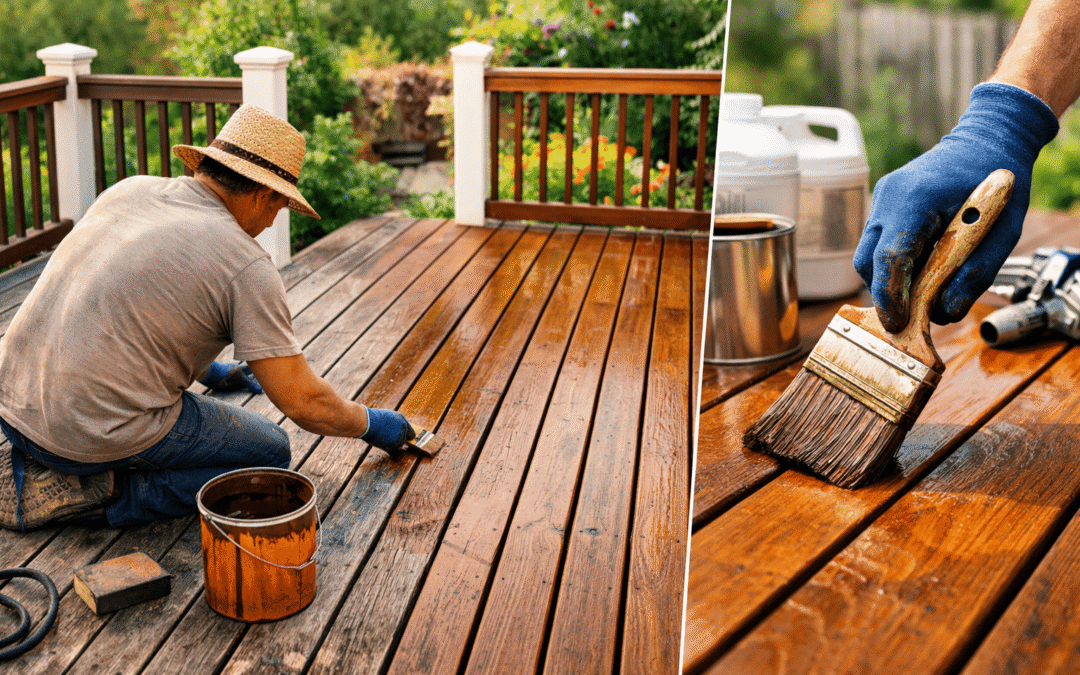
A great deck stain job isn’t just about making wood look richer or “new” again. It’s about protecting your outdoor space from moisture, UV damage, mildew, and the freeze/thaw cycles that quietly shorten a deck’s lifespan. When you choose the right deck staining service, you’re not only paying for the stain. You’re paying for the prep, the judgement, the technique, and the follow-through that determines whether the finish lasts or fails early.
If you’ve ever seen a deck that started peeling, blotching, or fading within a season or two, it usually wasn’t bad luck. Most early failures come down to one of three things: the wrong stain for the wood and exposure, rushed prep, or poor application timing. This guide will help you choose the best deck staining service for long-lasting protection, so you can feel confident you’re hiring a crew that does it right the first time.
What “Long-Lasting Deck Protection” Really Means
Before you compare quotes or ask about stain brands, it helps to define what you’re trying to protect against. “Long-lasting” doesn’t mean a deck will look freshly stained forever. It means the finish holds up in real-world conditions and wears down gradually, not suddenly.
Long-lasting protection usually includes moisture resistance, which helps reduce swelling, cracking, and rot risk. It also includes UV defence, which slows down greying, fading, and surface breakdown. Mildew and algae resistance matter too, especially in shaded areas or where airflow is limited.
The best staining services set realistic expectations. They’ll explain what’s achievable for your deck’s age and condition, and they’ll recommend a maintenance plan that keeps you ahead of damage instead of reacting after the finish fails.
Start With The Stain System: Oil-Based vs Water-Based
A quality staining service should be comfortable working with both modern oil-based and modern water-based stain systems and recommending the best fit for your deck. There isn’t a single “best stain” for every situation. The best option depends on your wood type, how much sun your deck gets, how exposed it is to moisture, and whether it has been coated before.
Oil-Based Stains: Deep Penetration And Strong Moisture Defence
Oil-based stains are often chosen for their ability to penetrate deeper into the wood. That penetration can translate into excellent moisture resistance and durable performance in tough weather conditions. Many homeowners prefer oil-based semi-transparent stains because they offer a natural look while still adding meaningful protection.
A quality service should also prepare you for the trade offs. Oil-based stains typically take longer to dry and cure. That means the crew should plan around weather windows and foot traffic, and they should set clear expectations about when you can use the deck again.
Oil systems can be an excellent choice when the goal is long-term protection and the deck boards are in a condition where they can absorb stain properly.
Advanced Water-Based Stains: Fast Dry, Easy Cleanup, Great Mildew Resistance
Modern water-based stains have come a long way. Many newer formulas offer strong mildew resistance, faster drying times, and easier cleanup. For some homeowners, especially those who need quicker turnaround or want less odor and simpler maintenance, water-based systems can be a great fit.
The key is that water-based performance depends heavily on prep quality and application conditions. If the wood is still damp, dirty, or uneven from previous coatings, the finish may not bond the way it should. A good staining service won’t just “sell” water-based stain as the easy option. They’ll explain how they’ll prep the surface so the system performs like it’s supposed to.
What You Want To Hear From A Real Pro
The best deck staining contractors don’t answer “oil or water?” with a one-size-fits-all response. They ask questions first. They look at the wood. They check exposure. They talk about what’s on the deck now. They explain why one option will last longer in your specific conditions.
If a contractor can’t clearly explain why they recommend a certain stain type for your deck, that’s a warning sign. Long-lasting protection starts with a recommendation that’s based on your deck, not their convenience.
Semi-Transparent vs Solid: The Look You Choose Affects Longevity
Stain “transparency” is one of the most overlooked decisions homeowners make. It affects not only the appearance of your deck, but also how the finish wears and how easy it is to maintain over time.
Semi-Transparent: Natural Grain With Durable Protection
Semi-transparent stain is popular because it enhances the natural wood grain while still adding color and UV protection. Many homeowners like the balance it offers, especially on newer or well-maintained decks.
Maintenance can be easier with semi-transparent systems when they’re applied correctly and kept on schedule. Instead of waiting for failure, you can often clean and recoat before the finish breaks down.
Solid Stain: Maximum Coverage And Strong UV Blocking
Solid stain covers more of the wood surface and hides imperfections better. It can be a smart choice for older decks, decks with patchwork repairs, or wood that has uneven color and weathering.
The tradeoff is that solid systems can behave more like paint. When they fail, they’re more likely to peel or flake in problem areas. That doesn’t mean you should avoid solid stain. It means you should hire a contractor who knows how to prep properly and set realistic expectations about maintenance and wear.
Prep Work Is The #1 Predictor Of How Long Your Stain Will Last
If you only remember one thing from this article, make it this: prep is the job. Stain is the final step, but prep is what determines whether it bonds, penetrates, and wears evenly.
A high-quality staining service should inspect your deck before quoting a final scope. They should identify rot, loose boards, failed fasteners, and railing issues. If repairs are needed, they should be addressed before the staining begins.
Cleaning should be done with purpose, not brute force. Too much pressure can damage wood fibres and create a fuzzy surface that won’t accept stain evenly. Too little cleaning leaves contaminants behind that interfere with bonding. A good contractor uses the right approach for the deck’s condition, including proper cleaning solutions when mildew or old residue is present.
Sanding is another huge piece of long-lasting results. Many decks benefit from sanding, especially older wood or surfaces where the grain has raised. Sanding improves penetration and helps you avoid a blotchy, uneven look. It also reduces the risk of premature failure caused by poor bonding.
Finally, drying time is non-negotiable. Staining damp wood is one of the fastest ways to shorten the life of a stain job. The best contractors plan around the forecast and give the deck the time it needs before applying product.
The Staining Method Matters More Than Most Homeowners Realise
Two contractors can use the same stain and get totally different results. That difference often comes down to how the stain is applied.
Brush and roller application gives the best control and can help work stain into the wood. It’s often the go-to method for quality-focused work, especially on boards that benefit from deeper penetration.
Spray application can be effective on large decks, railings, and spindles, but only when it’s paired with a back-roll or back-brush technique. Spraying alone can leave thin coverage, lap marks, and uneven penetration. A professional service should explain their method and why it fits your deck’s layout.
They should also talk about coats. “One coat” isn’t always a shortcut, and “two coats” isn’t always better. The best approach depends on the product system, the wood’s absorption, and the desired finish. What matters is that the crew follows manufacturer guidance and adjusts based on what the wood is doing, not what’s fastest.
Questions To Ask Before You Hire A Deck Staining Company
Most homeowners don’t need to become stain experts. You just need the right questions that reveal whether a contractor is process-driven or guess-driven.
Here are a few questions that quickly separate experienced staining services from “we do it all” crews:
-
What stain type do you recommend for my deck’s wood and exposure, and why?
-
What is your prep process, including cleaning, repairs, sanding, and dry time?
-
Do you offer a workmanship warranty, and what does it cover?
The best contractors won’t get defensive. They’ll welcome the questions, because a clear process is their advantage.
Red Flags That Usually Lead To Early Failure
Some warning signs show up before a contractor ever touches your deck. If you spot them early, you can avoid a frustrating outcome.
-
They recommend a stain type before seeing your deck or asking about its history.
-
They minimise prep (“we’ll power wash and stain right after”) without mentioning drying time or sanding.
-
They can’t explain what happens if the deck has old stain, peeling areas, or soft boards.
A professional deck staining service should make prep and timing feel like the main event, not an afterthought.
How To Get Deck Stain To Last Longer After The Job Is Done
Even the best stain system benefits from basic upkeep. Think of it like maintaining your roof or gutters. Small habits reduce wear and keep the finish performing.
The biggest enemy of a stained deck is trapped moisture. Wet leaves, dirt buildup, and shaded corners create the conditions for mildew and premature breakdown. A simple seasonal cleaning keeps the surface breathable and reduces stain wear in high-risk areas.
If your deck gets heavy sun, UV will slowly degrade the finish. If your deck gets heavy shade, moisture and mildew will be the bigger battle. Either way, the goal is the same: keep the surface clean, address small issues early, and redcoat before the finish fails.
Here are three simple maintenance habits that make a big difference:
-
Keep debris off the deck, especially wet leaves and organic buildup.
-
Wash the deck periodically with a gentle approach that doesn’t damage wood fibers.
-
Do small touch-ups early instead of waiting until wear spreads.
Where Core Improve Fits
If you’re in Chicago or the surrounding suburbs, Core Improve is built for homeowners who want long-lasting results without juggling multiple contractors. We handle the full deck protection process, including inspection, board and railing repairs, surface preparation, and professional staining so the system performs the way it should.
If you’re exploring professional help, start here: Deck Staining and Repair. And if you’re still deciding on the look and finish style, this guide can help you narrow it down: How to Choose the Deck Stain Color.
When staining and repair are handled by the same team, prep doesn’t get skipped, repairs don’t get ignored, and the finished stain job is built on a solid foundation.
FAQs
What is the longest lasting deck protection?
The longest-lasting protection comes from thorough prep (cleaning, repairs, sanding when needed, proper drying) plus a stain system that fits the wood and exposure.
How to get deck stains to last longer?
Choose a contractor with a clear prep process, follow the recommended dry-time rules, and maintain the deck with seasonal cleaning and early touch-ups.
What’s the best method to stain a deck?
Brush/roller application offers strong control and penetration. Spray can work well on large surfaces and railings if it’s followed by proper back-rolling/back-brushing.
Does staining a deck protect it?
Yes. Staining helps protect against moisture and UV damage, which can reduce cracking, greying, and premature wood deterioration when applied correctly.