
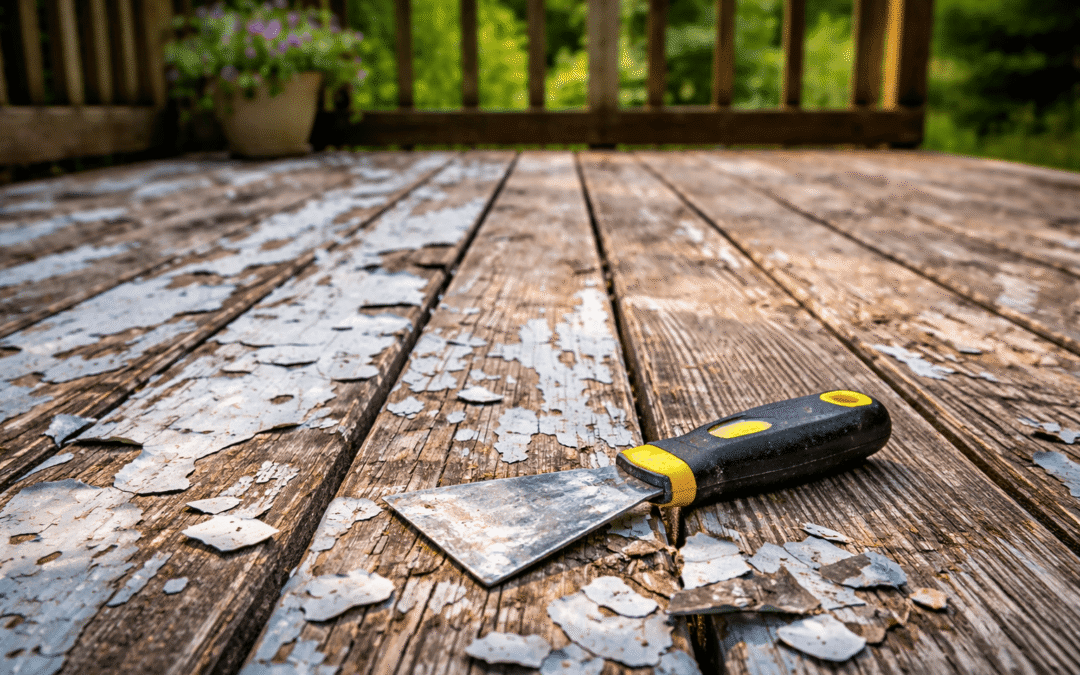
A freshly painted deck can look amazing for a minute. It covers knots, hides discoloration, and gives you that “brand-new” finish in a weekend. But decks aren’t like interior trim or siding. A deck lives in the worst possible environment: full sun, standing water, snow, foot traffic, dragging furniture, grill grease, and constant expansion and contraction. When you add paint to that mix, you’re not just changing the colour you’re setting up a failure cycle that usually ends in peeling, trapped moisture, and premature wood damage.
If your goal is a deck that stays safe, solid, and good-looking for years not just one season the real answer is simple: wood decks shouldn’t be painted. Here’s why, and what to do instead.
Paint Turns a “Breathing” Surface Into a Moisture Trap
Wood is porous. Even pressure-treated lumber absorbs and releases moisture depending on rain, humidity, temperature, and shade. That movement is normal. The problem with paint is that it creates a film over the top of the wood. Once that film is down, the deck can’t “breathe” the same way.
Water doesn’t need a big opening to get underneath paint. It finds tiny cracks around fasteners, board edges, end grain, hairline splits, and worn traffic areas. Once moisture slips under the paint, the film prevents it from escaping. Now you have damp wood under a sealed surface. Over time, that trapped moisture becomes the perfect recipe for rot, decay, and weakening boards—often starting where you can’t see it.
This is one of the biggest differences between paint and stain. Stain penetrates the wood fibers and allows moisture to move in and out more naturally. Paint blocks that movement, and decks pay the price.
Horizontal Surfaces Punish Paint in a Way Walls Never Will
Paint can perform fine on vertical wood, like siding and trim, because water sheds off and the surface doesn’t get abused constantly. A deck is the opposite. It’s a horizontal surface that takes direct impact and constant wear.
A deck deals with:
- Standing water after rain or melting snow
- UV exposure all day
- Foot traffic grinding dirt into the finish
- Furniture legs and chair scrapes
- Temperature swings that expand and contract the boards
Paint isn’t built to flex and survive all that. Even “porch and floor” paints struggle on decks because the environment is harsher, and the boards move more than people think. Once the paint film starts to crack, the failure spreads fast.
Peeling, Chipping, and Cracking Are Not “If”—They’re “When”
Paint failure on decks is rarely subtle. It doesn’t just fade a little. It typically blisters, chips, flakes, and peels especially in high-traffic lanes, around stairs, and near railings where hands and shoes constantly rub.
Here’s what happens in real life. The paint looks solid at first. Then a few thin spots develop. Those spots crack. Water gets under the film. Sun heats the surface. Moisture expands. The paint blisters. Once that blister pops, the peeling starts, and now you have bare wood exposed next to sealed wood. That uneven exposure makes the next phase even worse.
Unlike stain, which usually wears down gradually, paint tends to fail in sheets. And once you’ve got widespread peeling, you can’t “touch it up” in any satisfying way. It turns into a full restoration job.
Paint Creates a High-Maintenance Deck That Costs More Over Time
Painting feels like the “budget” option because the upfront material cost can be low. The long-term cost is where homeowners get surprised.
When stain fades, the refresh process can often be straightforward: clean, prep properly, and recoat. When paint fails, you’re typically dealing with removal, not just reapplication. That means scraping, sanding, stripping, or power washing aggressively enough to lift paint while trying not to damage the wood fibers.
That removal step is where decks get expensive. It’s labor-heavy, messy, and time-consuming. And if the previous paint is stubborn or layered, the prep gets even harder. In many cases, boards end up needing replacement not because the wood is old, but because the paint system made restoration unrealistic.
If you want a finish that’s easier to maintain and less likely to trigger a full tear-down prep job, paint is the wrong direction.
Painted Decks Can Become Slippery and Unsafe
Safety is another reason pros avoid painting decks. A painted surface can get slick when wet—especially if it’s smooth, glossy, or worn down unevenly.
As paint starts peeling, it also creates an uneven walking surface. Edges lift. Chips collect. Bare wood spots absorb water differently than painted sections. The result is a deck that can feel inconsistent underfoot, especially on stairs and landings.
For households with kids, older family members, or frequent guests, this matters. A deck should be comfortable and predictable to walk on, not a surface that becomes slippery after every rain.
Paint Hides Problems You Actually Need to See
A natural wood deck gives you visible feedback. You can spot checking, early rot, raised grain, mildew, and water stains. A painted deck hides many of those warning signs until the issue becomes serious.
Rot doesn’t always start where you can see it. It often begins at:
- Board ends and end grain
- Fastener locations where water penetrates
- Joist tops and gaps where debris traps moisture
- Stair stringers and post bases
- Areas under planters, rugs, and furniture
If a painted surface looks “fine” from above, you can miss softening wood until it becomes a structural issue. A finish that allows inspection and doesn’t conceal early damage helps you protect your deck before repairs get expensive.
Chicago-Area Weather Makes Painted Deck Problems Worse
In the Chicago suburbs, decks get hit with a tough combination: freeze-thaw cycles, snow loads, ice melt products, spring rain, humid summers, and sharp temperature swings. That climate is especially hard on paint films.
When water gets into small cracks and freezes, it expands. That expansion widens cracks and loosens paint. When it warms up again, moisture moves. The deck repeatedly swells and shrinks through seasons. Paint doesn’t flex well enough to keep up.
That’s why painted decks around the Midwest often look great in the first photos and then deteriorate quickly as seasons stack up.
The Better Choice: Stain Protects Without Sealing Wood Shut
If you want long-term protection on a wood deck, stain is usually the smarter system. Stains penetrate into the wood and protect the fibers while still allowing the deck to release moisture more naturally.
Stain doesn’t mean “no maintenance.” It means the maintenance is more predictable and manageable. Instead of peeling sheets and stripping layers, you typically see gradual fading, which is much easier to refresh when the time comes.
Transparent, Semi-Transparent, and Solid Stain—What Actually Matters
Transparent and semi-transparent stains show more wood grain and give a natural look, but they may require a more regular maintenance schedule depending on sun exposure and wear.
Solid stains behave more like a coating and hide more grain, but they still tend to perform better than paint on decks when applied and maintained correctly especially when paired with proper prep and moisture management.
The right choice depends on your deck’s condition, the look you want, and how much sun and traffic it gets. The key is choosing a finish designed for decks, not a “pretty” coating that sets you up for peeling later.
Sealers Can Help—But Only When the Prep and Product Match the Deck
Some homeowners want a clear or lightly tinted finish that keeps the wood look front and center. Sealers can work when selected carefully, but the prep and product choice are critical.
A good system should protect against UV and moisture without turning the deck into a sealed moisture box. If you’re not sure what your deck needs, it’s better to get an inspection and a plan rather than guessing because the wrong product can create the same problems paint does, just in a different form.
What If Your Deck Is Already Painted?
If your deck is already painted, you’re not stuck but you do need a realistic path forward.
In some cases, the best route is controlled removal, board replacement where needed, and a transition to stain if the wood condition allows it. In other cases, especially where paint is deeply bonded or layered, maintaining a coating system may be the most practical approach while watching closely for peeling and moisture issues.
The important part is understanding the deck’s health first. If boards are soft, spongy, cracked through, or pulling away at fasteners, cosmetic fixes won’t solve the real problem. At that point, repair or replacement may be the safer investment.
A Quick Word About Core Improve and How We Help
At Core Improve, we’re a family-owned, fully insured team serving Chicago and the surrounding suburbs with deck building, deck repair, and long-term deck protection. When homeowners ask whether they should paint a wooden deck, we focus on what actually lasts in real Midwest weather proper prep, smart finishing systems, and repairs that keep the structure solid. If you’re deciding between repainting, stripping, staining, or repairing damaged boards, our Deck Staining & Repair service is designed to help you protect your investment with a clear plan and durable results.
The Bottom Line: Paint Is a Short-Term Look With Long-Term Consequences
Painting a wooden deck often feels like the fast solution. But the real-world results usually follow the same pattern: trapped moisture, peeling, expensive prep, and earlier wood failure.
If you want a deck that holds up through seasons, stays safer underfoot, and is easier to maintain, your best move is to choose a deck-appropriate system usually stain and pair it with proper cleaning, prep, and repairs where needed. That approach protects the wood instead of trapping it.
FAQs
Why should you never paint a deck?
Because paint forms a film that traps moisture. Once water gets under the paint, it can’t escape easily, leading to blistering, peeling, and faster wood deterioration—including rot that can compromise the deck’s structure.
What are the disadvantages of painting wood?
On decks, the biggest disadvantages are peeling and moisture trapping. Painted surfaces also require heavier prep and removal when they fail, and they can hide early signs of wood damage that you would otherwise catch sooner.
Is it advisable to paint decking?
In most cases, no. Decks take constant weather exposure and foot traffic, and paint usually fails faster than stain. Stains are generally better suited because they penetrate the wood and allow it to release moisture.
Can you paint a wood deck?
Yes, you can, but it’s rarely the best long-term option. If you paint a deck, you should expect higher maintenance and eventual removal work. If your deck has already been painted, your best path depends on the condition of the boards and the existing coating.
What should I use instead of paint on my deck?
In most cases, a quality deck stain is the better option. Stain penetrates the wood and provides protection while reducing the peeling-and-stripping cycle paint often creates.
What if my deck is already peeling from old paint?
Peeling paint usually means moisture and wear have already compromised the coating. The next steps often involve inspection, targeted repairs, and a plan for removal or refinishing depending on how much paint is failing and whether the wood underneath is still in good condition.